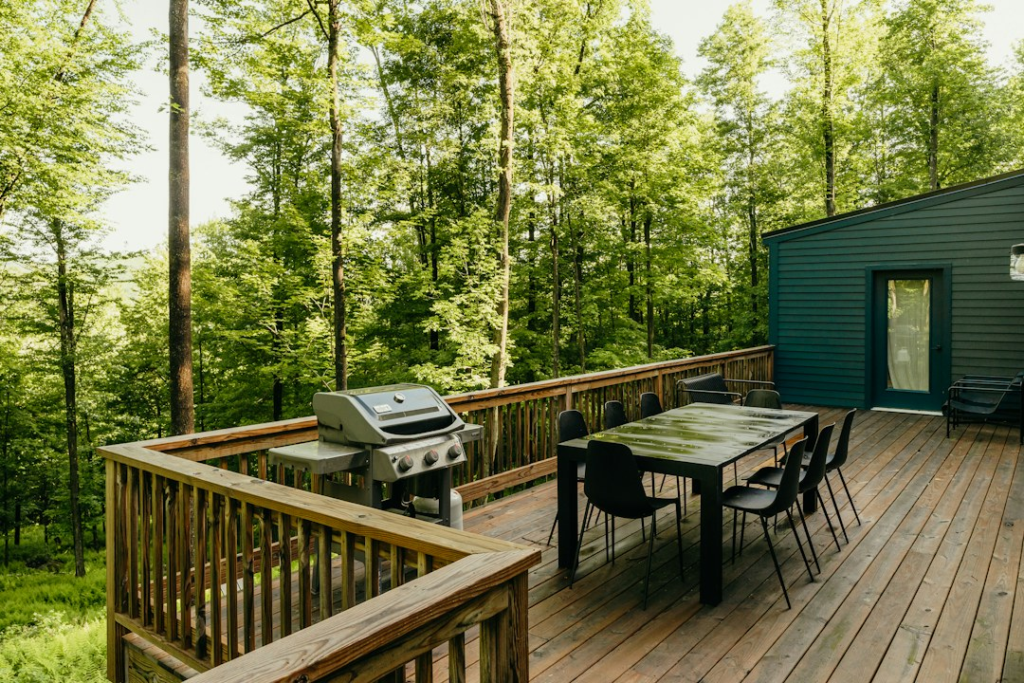
A redwood deck typically costs $28 to $54 per square foot installed in 2026. A straightforward 12-by-12-foot redwood deck may cost roughly $4,000 to $7,800, while a 20-by-20-foot project may cost about $11,200 to $21,600. Premium clear-heart boards, long-distance freight, an elevated structure, custom railings or extensive stairs can raise the total beyond that range.
Redwood is valued for its warm color, straight grain and natural resistance to decay. It is usually easier to cut and fasten than a tropical hardwood such as Ipe, but grade and heartwood content matter. A low quote for construction-grade material is not directly comparable with a proposal specifying premium heartwood boards.
These figures are national planning estimates, not a substitute for local bids. Material availability is strongest in the western United States, while delivery costs and selection may be less favorable in other regions.
In this Cost Guide
Redwood Deck Cost at a Glance
| Project level | Typical installed cost | Common scope |
|---|---|---|
| Value-oriented | $28–$36 per sq. ft. | Simple low deck, locally available boards, standard pattern and limited accessories |
| Midrange | $36–$45 per sq. ft. | Better grade selection, conventional framing, fascia or border details and normal site access |
| Premium or complex | $45–$54+ per sq. ft. | Clear-heart material, elevated work, difficult access, custom layout or higher regional freight |
The ranges describe a complete deck system, including the supporting structure and installation. Railings, stairs, demolition, engineering and major site preparation may be quoted separately. Use our deck cost estimator as an initial planning tool, then compare detailed local proposals.
Redwood Deck Cost by Size
The examples below apply the national $28 to $54 installed range to common deck sizes. They assume a rectangular plan and ordinary access. A second-story deck or a project with extensive guardrails and stairs should be priced from drawings rather than square footage alone.
| Deck size | Deck area | Estimated installed cost |
|---|---|---|
| 10 × 10 feet | 100 sq. ft. | $2,800–$5,400 |
| 12 × 12 feet | 144 sq. ft. | $4,000–$7,800 |
| 10 × 20 feet | 200 sq. ft. | $5,600–$10,800 |
| 15 × 20 feet | 300 sq. ft. | $8,400–$16,200 |
| 20 × 20 feet | 400 sq. ft. | $11,200–$21,600 |
Costs do not rise in a perfectly straight line. Small decks still require mobilization, layout, footings and permit work, so their cost per square foot can be high. A large, uncomplicated platform may gain some efficiency, while a large elevated deck may need larger beams, deeper footings and more safety equipment.
Understanding Redwood Grades
“Redwood” is not one uniform product. Appearance, natural durability and price depend on the grade, the proportion of heartwood and the board specifications. Grade names can vary by supplier, so the written description in a quote matters more than a casual label.
Heartwood and sapwood
Heartwood comes from the inner portion of the tree and generally has the deeper red-brown color and strongest natural decay resistance associated with redwood. Sapwood is lighter and is not equally decay-resistant. Mixed boards may be appropriate in some above-ground applications, but they should not be priced or represented as premium all-heart material.
Clear and architectural grades
Clear or nearly clear grades emphasize appearance and contain few knots. Clear-heart products combine that appearance with heartwood content and generally command the highest prices. They are often chosen for prominent deck surfaces, rail caps, benches and finish details.
Construction and common grades
Knotty or construction-oriented grades can provide the redwood look at a lower price. The number and size of knots, heartwood content and allowed characteristics vary. Ask the supplier for the grading rule or product sheet and inspect representative boards before approving a large order.
Specify board thickness, width, profile, surface texture and whether dimensions are nominal or actual. A quote that simply says “redwood decking” leaves too much room for substitutions.
What Changes the Price?
Location and availability
Redwood is grown and milled primarily on the U.S. West Coast. Buyers near established distributors may have better selection and lower freight than those in regions where redwood is a special-order item. Delivery minimums, fuel charges and hand-unloading can affect a small project disproportionately.
Grade and board length
Premium heartwood, clear faces, longer lengths and wider or thicker profiles cost more. A layout designed around readily available lengths can reduce waste and butt joints. Picture-frame borders, diagonal decking and selective color matching increase the order quantity.
Deck height and structural scope
The redwood surface is only part of the system. Footings, posts, beams, joists, ledger flashing, connectors and blocking can equal or exceed the surface cost. Elevated, second-story and multi-level decks require more labor and may need engineering. Reusing an existing frame is sensible only after a qualified inspection confirms it is sound and compatible with the new layout.
Railings, stairs and accessories
Guardrails are usually priced by linear foot, and stairs are labor-intensive. Built-in seating, privacy screens, gates, lighting, pergolas and dry-space systems should appear as separate line items. See our deck railing cost guide when comparing alternatives.
Finish and maintenance expectations
A homeowner who wants to preserve a fresh redwood color should budget for cleaning and a compatible penetrating finish. Allowing the surface to weather naturally reduces color-maintenance work, but inspection and cleaning are still necessary.
Redwood Decking Pros and Cons
Advantages
- Distinctive natural appearance: Redwood offers warm red-brown tones, visible grain and a softer look than manufactured decking.
- Natural durability: Heartwood contains extractives that improve resistance to decay and insects.
- Workability: Redwood is generally easier to cut, drill and shape than very dense tropical hardwoods.
- Comfort underfoot: Properly finished boards provide a warm natural-wood surface that can be refinished as it ages.
- Regional availability: In parts of the western U.S., established suppliers may offer good grade and length selection.
Disadvantages
- Grade variation: Sapwood, knotty common boards and clear heartwood have different performance and prices.
- Maintenance: Preserving the original color requires a suitable finish and periodic care.
- Surface wear: Redwood is softer than Ipe and can dent or scratch under furniture and heavy use.
- Regional price differences: Freight and limited inventory can make redwood less competitive outside its main distribution region.
- Color change: Unfinished redwood weathers toward gray, which may not suit every homeowner’s preference.
Redwood vs. Cedar, Pressure-Treated Wood and Composite
Cedar decking and redwood share a natural appearance, relatively light weight and good workability. Local availability and grade often decide which represents better value. Compare written specifications rather than assuming the species name guarantees a particular quality.
Pressure-treated decking is normally the budget choice. It uses preservatives to improve decay and insect resistance, while redwood heartwood has natural resistance and a more distinctive appearance. Pressure-treated lumber can still be a practical framing material beneath a redwood surface when all components and fasteners are compatible.
Composite decking costs more than entry-level wood in many markets but offers manufacturer-defined colors, installation systems and warranties without routine wood finishing. Redwood can be sanded and refinished and has authentic grain; composite provides greater visual consistency and different maintenance needs.
Installation Details That Matter
- Use the correct grade for the exposure. Confirm whether boards contain heartwood, sapwood or a mixture and whether the supplier approves the product for the intended use.
- Check moisture and spacing guidance. Board gaps depend on moisture condition at installation and expected movement. Follow the supplier’s current instructions instead of using one gap for every shipment.
- Plan for drainage and airflow. Keep debris and water from being trapped between boards, against the house or on the supporting frame.
- Select compatible fasteners. Stainless steel is a dependable premium option, particularly near salt air. Approved hot-dipped galvanized or coated systems may be suitable in other exposures; follow material, connector and code requirements.
- Protect cut ends and details. Follow the finish or preservative manufacturer’s directions for field cuts, end grain and any vulnerable sapwood.
- Avoid overtightening. Fasteners driven too deeply can trap water and damage the softer wood surface.
Structural design, ledger attachment, footing depth, guard height and stair geometry are governed by local requirements. A good-looking redwood surface cannot compensate for unsafe framing or poor water management.
Finishing and Maintenance
Redwood can be left to weather to gray or treated with an exterior finish intended for redwood. A penetrating finish is commonly chosen when the goal is to retain color while allowing moisture movement. Before applying any product, verify that the deck is clean, dry enough and prepared according to the label.
Maintenance frequency depends on sun, rain, shade, foot traffic and the finish—not a universal annual schedule. Inspect the deck each year and recoat when water behavior, color and the coating manufacturer’s criteria indicate it is needed.
Remove leaves and dirt that hold moisture. Clean with the least aggressive method that works, and test cleaners in a hidden area. High-pressure washing can raise fibers or cut the surface, especially when the nozzle is close. If pressure equipment is used, keep it controlled and follow professional or finish-manufacturer guidance.
Check fasteners, rail connections, ledger flashing, posts, beams and joists as well as the boards. Early repair of drainage or structural problems is less costly than waiting for visible failure. Our deck repair guide explains common signs that need attention.
How Long Does a Redwood Deck Last?
A redwood deck commonly provides about 20 to 30 years of service, and a well-designed deck using durable heartwood can last longer. Lifespan varies widely with grade, climate, drainage, ventilation, finish care and the supporting structure. Sapwood-heavy material in a damp, poorly ventilated detail will not perform like premium heartwood in a well-drained assembly.
When resurfacing an existing deck, have the frame and connections inspected. Replacing only the visible boards can hide ledger, post, beam or joist deterioration and may not correct an outdated structural design.
DIY or Professional Installation?
Redwood is workable for an experienced DIY carpenter, especially on a small low-level platform built from an approved plan. However, deck construction involves structural loads, footings, house attachment, stairs and guards. Mistakes in those areas create safety and water-intrusion risks.
Hire a qualified deck contractor for elevated work, structural replacement, difficult sites, complex stairs or projects that require engineering and permits. If you do some work yourself, confirm responsibility for permits, inspections, material storage, finishing and warranty coverage in writing.
How to Compare Redwood Deck Quotes
Ask at least three contractors to price the same plan and written material specification. Each proposal should identify:
- Redwood grade, heartwood/sapwood requirements, profile, actual dimensions and lengths
- Deck area, board direction, border details and waste allowance
- Framing material, footing design, ledger flashing, connectors and fasteners
- Railings, stairs, fascia, benches, lighting and other options as separate items
- Delivery, demolition, disposal, permits, engineering, inspections and cleanup
- Surface preparation and finish product, number of coats and excluded maintenance
- Material and workmanship warranties, schedule and payment terms
Do not compare a clear-heart proposal with an unspecified “redwood” bid as if they are the same product. Ask for samples or the supplier’s product sheet before signing.
Redwood Decking FAQs
How much does a 12 × 12 redwood deck cost?
At $28 to $54 per square foot installed, a 144-square-foot redwood deck has a planning range of approximately $4,000 to $7,800. Railings, stairs, demolition and difficult structural work can add to that total.
Does redwood need to be sealed?
Not solely to prevent immediate failure, but a suitable penetrating finish can help manage weathering and retain color. Use a product approved for redwood and follow its preparation and recoat instructions.
Is heartwood worth the extra cost?
Heartwood generally provides the natural decay resistance most buyers expect from redwood. It is especially valuable when durability and appearance are priorities. The best choice depends on exposure, budget and the exact grade offered.
Can redwood be pressure washed?
Aggressive pressure can damage the softer surface and raise fibers. Begin with gentle cleaning, follow the finish manufacturer’s guidance and use controlled pressure only when appropriate.
How much extra decking should I order?
About 10% is a common starting allowance for a simple straight layout. Diagonal boards, borders, complex shapes, selective color matching or limited available lengths may require 15% or more.
Is redwood cheaper than composite?
It can be, particularly where redwood is locally available and a value-oriented grade is suitable. Premium clear-heart redwood may overlap or exceed some composite systems. Compare complete installed scope and expected maintenance, not board price alone.
Sources and Cost Methodology
We reviewed current national deck-cost reporting, material-specific ranges and the variables that most often change contractor bids. The $28 to $54 installed range and size calculations are benchmarked against HomeGuide’s 2026 deck-cost data, which lists redwood separately from other materials. We rounded size examples to useful planning figures and treated premium grades, elevated construction and accessories as variables rather than hiding them in one average.
Local prices can differ substantially, so obtain itemized bids for your exact drawings, grade and site. Read How We Research Deck Costs for our editorial process and disclosure policy.