2026 installed cost
$75–$260 per linear foot
A straightforward system using wood or aluminum posts can start lower, while stainless posts, stairs, fascia mounts, premium fittings and coastal-grade materials move the project higher. Complex custom work can exceed this planning range.
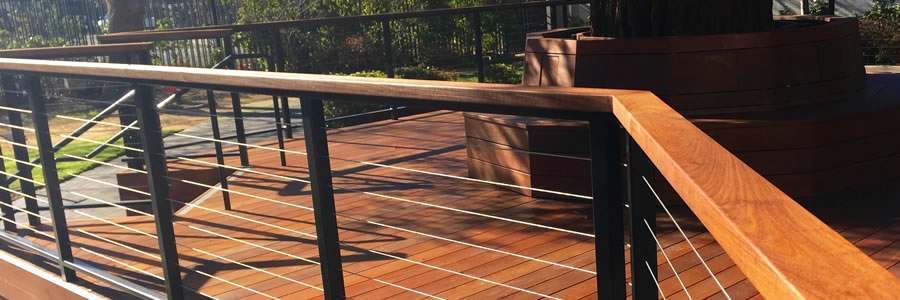
Cable railing is valued for open sightlines and a clean contemporary appearance, but it is not simply inexpensive wire threaded through posts. A safe system requires suitable posts, a stiff top rail, terminal and intermediate hardware, correct cable spacing and tension, and structural connections capable of resisting the combined loads.
This guide uses current 2026 manufacturer and national pricing to separate system cost from installation and explain the details that most affect a quote. Compare other materials in our deck railing cost guide.
In this Cost Guide
Cable Railing Cost at a Glance
| System level | Installed cost per linear foot | Typical scope |
|---|---|---|
| Value / DIY-oriented | $60–$100 | Wood posts or stock aluminum kits, level straight runs and homeowner labor or limited professional labor |
| Standard professional | $100–$175 | Aluminum or stainless components, several corners, standard stairs and concealed or upgraded fittings |
| Premium / custom | $175–$260+ | Premium stainless or rod systems, fascia mounts, complex stairs, many terminations, custom rails or coastal specifications |
Viewrail’s February 2026 published material pricing places complete cable and rod systems at roughly $60–$250 per linear foot, depending on post and infill materials. National consumer cost data places common professionally installed cable projects around $75–$260 per linear foot, with a wider market range for highly customized work.
Important: confirm whether a quoted per-foot figure covers materials only or the complete installed guard. Freight, tax, demolition, framing reinforcement, permits and stairs may be additional.
Cable Railing Cost by Project Length
| Railing length | Estimated installed total | Planning example |
|---|---|---|
| 30 linear feet | $2,250–$7,800 | Small deck edge or balcony with a simple level run |
| 50 linear feet | $3,750–$13,000 | Three-sided deck with several terminal posts |
| 65 linear feet | $4,875–$16,900 | Larger deck plus a stair section |
| 100 linear feet | $7,500–$26,000 | Large or multi-level layout with premium hardware |
Short projects can have a high per-foot price because terminal posts, tensioners and tools are needed regardless of length. Corners and separate cable runs also add expensive termination points.
Material Cost by Post and Infill Type
The following material-only examples use current published Viewrail ranges. Installation, shipping, tax and site work are not included.
| Example system | Published material range | Cost position |
|---|---|---|
| Express cable with aluminum posts | $60–$110 per foot | Lower-cost complete metal system |
| Stainless cable with aluminum posts | $90–$155 per foot | Mid-range |
| Stainless cable with 304 stainless posts | $120–$195 per foot | Premium |
| Stainless cable with 2205 stainless posts | $140–$215 per foot | Higher-corrosion-resistance specification |
| Rod infill systems | $115–$245 per foot | Premium to luxury |
These figures show why generic “cable railing cost” estimates vary so widely. Wood-post cable kits can cost less, while premium stainless or rod systems can reach the upper range before labor begins.
What Makes Cable Railing Expensive?
Post and top-rail material
Wood posts are often the least expensive route when they are properly designed and protected. Prefabricated aluminum posts reduce fabrication and offer a consistent finish. Stainless steel is heavier and more costly, with alloy selection becoming especially important in harsh or coastal environments.
Terminations and corners
Every independent cable run needs terminal hardware. A long straight run can be economical; a small deck with many corners may need several tensioning assemblies and more reinforced end posts.
Stairs
Stair cables, angled holes and sloped rails require careful layout. Stair pricing should be shown separately because the work is slower and specialist components may be required.
Surface vs. fascia mounting
Surface-mounted posts sit on the deck and are usually the simplest to detail. Fascia or side mounting preserves usable deck space and creates a clean edge, but it often requires more blocking, access and hardware.
Cable and fitting quality
Marine-grade stainless, black cable, concealed tensioners and premium end fittings cost more than basic exposed hardware. Choose a system for the environment and follow its instructions; “stainless” alone does not describe alloy, finish or suitability.
Existing framing
Cable loads can expose weak posts, flexible rails or inadequate blocking. Replacement projects may need framing repairs before a code-compliant system can be installed.
Cable Railing Components
- Structural posts: end, corner and intermediate posts resist guard and cable loads.
- Top rail: ties the system together and may be wood, aluminum or stainless steel.
- Cable: commonly stainless wire rope sized for the tested system.
- Terminals and tensioners: secure and adjust each run.
- Intermediate supports: limit deflection between posts and help maintain spacing.
- Mounting hardware: connects posts into approved framing or concrete.
- Protective fittings: sleeves or grommets protect cable where it passes through posts.
Brands and System Types
Examples include Viewrail, Feeney CableRail, Atlantis RailEasy, Fortress, Key-Link, Westbury VertiCable and premium lines from larger decking manufacturers. Some use horizontal cable; others use vertical cable or rigid rod infill.
System components are not automatically interchangeable. Use the post spacing, cable type, terminals, tension and mounting details specified by the selected manufacturer. Request the current installation guide before purchasing so you can price every required component.
Horizontal cable
This is the familiar minimal design and usually uses repeated horizontal cable runs. Local officials may consider climbability as well as opening size, so confirm acceptance before ordering.
Vertical cable
Vertical systems change the visual direction and may reduce some homeowner concerns about horizontal lines. They require their own engineered rails and tensioning details and are not simply a horizontal system turned ninety degrees.
Rod infill
Rigid rods provide a cable-like appearance with less visible sag, but they are generally premium products. Published 2026 manufacturer pricing shows rod systems above many cable configurations.
Code, Spacing and Cable Tension
Typical residential model-code principles include 36-inch guards in many jurisdictions and openings that do not allow a four-inch sphere to pass. Some states and municipalities require 42-inch guards, and commercial or multifamily rules differ. Stair handrails have separate height, graspability and continuity requirements.
Cable must remain tight enough that the opening requirement is met under expected deflection. That depends on cable spacing, post spacing, cable tension, rail stiffness and terminal-post strength. A nominal three-inch cable spacing does not guarantee compliance if the cable or posts flex excessively.
Use an evaluated system and confirm the locally adopted code with the building department. Do not guess at cable tension: too little allows excessive deflection, while excessive tension can pull posts inward or damage framing.
DIY vs. Professional Cable Railing
DIY cable railing can save labor when the deck framing is sound, the layout is simple and the selected kit provides clear instructions. Expect repetitive measuring, drilling, cutting, swaging and tensioning. Specialized cutters, gauges and swaging tools may be required.
Professional installation is recommended for elevated decks, long runs, several corners, stairs, fascia mounts, stainless fabrication or coastal sites. A qualified installer should verify framing and termination details before ordering materials.
Maintenance
Inspect the guard at least annually and after major movement or impact. Check cable tension, terminal hardware, post bases and top-rail connections. Clean stainless with manufacturer-approved products and rinse salt or chemical deposits. Never assume that a loose cable only needs tightening; investigate movement in posts and framing first.
How to Compare Cable Railing Quotes
- Provide the same drawing, lengths, corners, stairs and mounting method to each bidder.
- Confirm post and cable alloy, finish, cable diameter and hardware brand.
- Ask whether freight, tax, tools, permits and structural blocking are included.
- Require separate pricing for stairs, demolition and framing repairs.
- Confirm who supplies the design and installation documentation for inspection.
- Compare product and workmanship warranties separately.
Estimate your project and request local railing quotes once the layout and system level are defined.
Cable Railing FAQs
Is cable railing more expensive than aluminum balusters?
Usually. Standard aluminum picket systems tend to require fewer individual tensioning components. Cable becomes especially expensive with stainless posts, many corners, stairs or premium concealed fittings.
How far apart should cable railing posts be?
There is no universal spacing that suits every system. Follow the manufacturer’s tested post and intermediate-support spacing; closer supports generally reduce cable deflection.
Does cable railing block the view?
It preserves sightlines better than many solid or wide-baluster systems, although horizontal cables remain visible at close range. Dark cable and slim posts can reduce visual prominence.
Can cable railing use existing wood posts?
Possibly, but the posts, top rail and framing must be suitable for combined cable and guard loads. Have the structure evaluated rather than assuming existing posts are adequate.
Will cable railing loosen?
Some adjustment may be required after initial installation or seasonal movement. A system that repeatedly loses tension can indicate post movement, incorrect hardware or an installation problem.
Sources and Cost Methodology
Our national planning range combines February 2026 manufacturer system pricing with current installed-cost data. Material-only and installed figures are labelled separately. We round totals because layout, alloy, terminations, freight, labor and framing condition can change the price substantially.
Substantively reviewed: September 10, 2026