2026 U.S. planning range
$30–$80 per square foot installed
A straightforward composite deck may fall near the lower end. New framing, premium boards, railings, stairs, elevation, difficult access and higher-cost labor markets can move a project toward—or beyond—the upper end.
A composite deck combines a low-maintenance walking surface with a wood, steel or aluminum supporting structure. For a complete new deck in the United States, a realistic early budget is usually $30 to $80 per square foot installed. That makes a 16-by-20-foot deck approximately $9,600 to $25,600 before unusually complex features.
This guide explains what is included, how deck size changes the total, where quotes differ and when paying more for composite decking can make sense. It is a national planning guide rather than a contractor quote; local labor, permits, frost depth, access and product availability can change the final figure considerably.
Quick budgeting rule: calculate the deck area, multiply it by $40 to $80 for a complete attached deck with new substructure, and keep a separate allowance for railings, stairs, demolition and premium features.
In this Cost Guide
Composite Deck Cost at a Glance
| Project or cost measure | 2026 planning range |
|---|---|
| Complete composite deck, professionally installed | $30–$80 per sq. ft. |
| Common attached deck with new substructure | $40–$80 per sq. ft. |
| Composite deck material package | $10–$32 per sq. ft. |
| Elevated or second-story design | $50–$100+ per sq. ft. |
| Typical current manufacturer warranty | 25–50 years, depending on product line |
The ranges overlap because published estimates use different specifications. For example, a material package may include the pressure-treated substructure, decking, hardware and fasteners but exclude labor and railing. An installed price may include all of those items. Always compare the inclusions in writing.
Composite Deck Cost by Size
The table below uses $40 to $80 per square foot as a planning range for an attached composite deck with a new supporting structure. A simple ground-level platform may cost less; second-story, multi-level and heavily customized decks may cost more.
| Deck size | Square footage | Estimated installed cost |
|---|---|---|
| 10′ × 10′ | 100 sq. ft. | $4,000–$8,000 |
| 12′ × 12′ | 144 sq. ft. | $5,760–$11,520 |
| 12′ × 16′ | 192 sq. ft. | $7,680–$15,360 |
| 12′ × 20′ | 240 sq. ft. | $9,600–$19,200 |
| 16′ × 20′ | 320 sq. ft. | $12,800–$25,600 |
| 20′ × 20′ | 400 sq. ft. | $16,000–$32,000 |
These totals cover ordinary materials and professional installation. They do not automatically include removal of an old deck, structural engineering, major grading, an under-deck drainage system, electrical work, a roof, outdoor kitchen or hot-tub reinforcement.
How We Calculate the 2026 Range
Deck Cost Guide compares current manufacturer material estimates with published U.S. contractor-cost data. Trex currently places a complete material package—including substructure, decking, hardware and fasteners—at approximately $10 to $27 per square foot. HomeGuide’s February 2026 national data places materials at $16 to $32 per square foot and a complete installed composite deck at $40 to $80 per square foot.
Because project definitions differ, we use $30 to $80 per square foot as the wider early-planning range, then explain which projects are most likely to sit inside each part of it. We do not treat a national average as a local quote.
Pricing reviewed: September 2026
What a Complete Quote Should Identify
- Footings, posts, beams, joists and other substructure materials
- Composite deck boards, fascia, trim and waste allowance
- Fasteners, clips, flashing and joist protection
- Deck railing, gates and code-required guards
- Stairs, landings and any lighting
- Demolition and disposal of an existing deck
- Permit, drawings, inspections and engineering where required
- Labor, delivery, site protection and cleanup
What Is Composite Decking?
Composite decking is manufactured from a blend of wood fiber, plastic and binding additives. Modern products are normally capped with a protective polymer layer that improves resistance to moisture, staining and fading. The boards are used as the deck surface; they are not a substitute for correctly designed structural framing.
Composite and PVC decking are often grouped together, but they are different products. Wood-plastic composite contains wood fiber, while PVC decking is primarily plastic. Both are available in entry, mid-range and premium collections with different colors, surface patterns, warranties and heat characteristics.
Recycled content varies by manufacturer and collection. Trex, for example, states that its composite decking is made from 95% recycled and reclaimed material. That figure should not be applied automatically to every composite brand.
Composite Deck Price Factors
Decking Collection and Board Profile
Entry-level boards usually offer fewer colors and a simpler grain. Premium lines may use more varied color blending, deeper embossing, enhanced scratch resistance or a longer warranty. Compare the coverage per square foot and all required accessories rather than looking only at the price of one board.
New Build Versus Resurfacing
Installing new boards over a sound, code-compliant frame can cost less than constructing a complete deck. However, the contractor should inspect joists, beams, footings, flashing and ledger attachment before reuse. Covering a weakened structure with new decking does not solve the underlying problem.
Height, Shape and Access
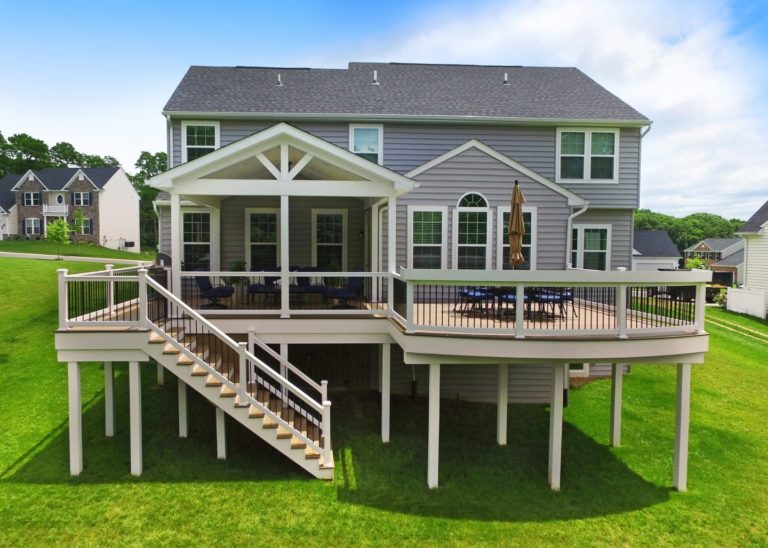
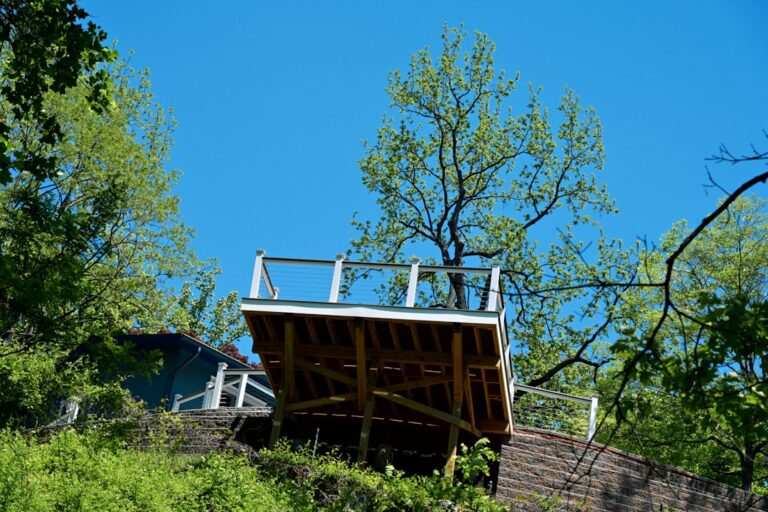
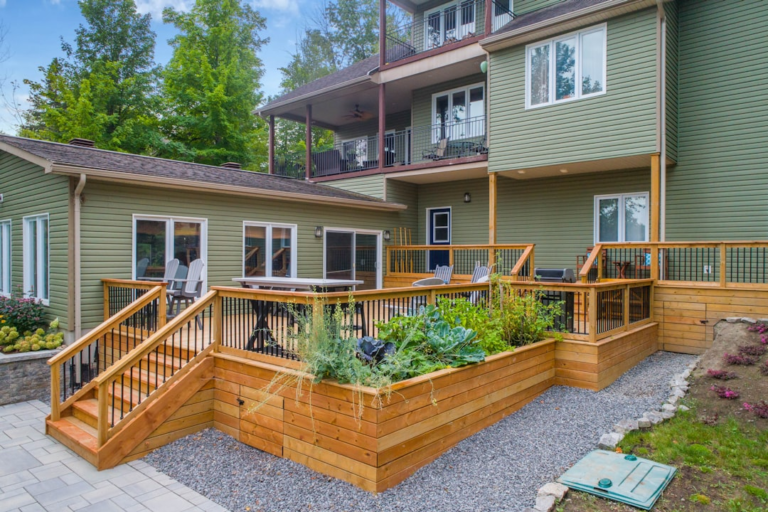
A rectangular ground-level deck is generally the least expensive form. Curves, diagonal board patterns, picture-frame borders, multiple levels, second-story work and restricted access increase material waste and installation time. Elevated work also adds foundations, bracing, stairs and code-required guards.
Railings and Stairs
Railing is commonly priced by linear foot rather than deck area and can materially change the total. Aluminum, cable and premium composite systems cost more than a basic pressure-treated rail. Long stair runs require additional framing, landings, handrails and labor.
Location, Permits and Season
Labor rates vary substantially between U.S. markets. Frost depth, wind and wildfire requirements can also change footing or product specifications. A permit may be required even for a modest deck, so check with the local building department before assuming the quoted price is complete.
Advantages of Composite Decking
- No routine sanding, staining or sealing
- Resists rot, splintering and insect damage at the deck surface
- Available in a wide range of colors and grain patterns
- Consistent board dimensions and optional hidden-fastener systems
- Many current product warranties run from 25 to 50 years
- Recycled content is available, although the percentage varies by brand
- Lower routine maintenance than most natural-wood decking
Disadvantages of Composite Decking
- Higher initial cost than pressure-treated decking
- Dark colors can become hot in direct sun
- Scratches, grease and abrasion can still mark the surface
- Individual damaged boards can be difficult to color-match years later
- Board expansion, ventilation and fastener spacing must follow the manufacturer’s instructions
- Some homeowners still prefer the grain and feel of natural wood
- Not every product has the same slip, flame-spread or heat performance
Composite Versus Wood: Is the Extra Cost Worth It?
Composite normally costs more upfront than pressure-treated lumber. The value proposition is reduced maintenance: the surface does not require regular staining or sealing, and it is not susceptible to rot in the same way as a wood deck board.
Wood may still be the better choice when the initial budget is the overriding concern, the owner wants an authentic wood surface, or regular refinishing is acceptable. Composite becomes more attractive when long-term maintenance time, splinter resistance and appearance consistency matter more than the lowest purchase price.
Do not assume that composite removes every future expense. The supporting structure, fasteners, flashing and railings still require inspection, and spills should be cleaned promptly.
Top Composite Decking Brands
The U.S. market includes several established manufacturers. Availability and pricing vary by region, retailer and installer.
- Trex decking costs and collections
- TimberTech decking costs and collections
- Envision decking costs and collections
- Fiberon composite decking
- Deckorators composite and mineral-based decking
- Veranda composite decking
Compare warranty length, stain and fade coverage, labor coverage, heat-mitigation claims, slip testing, approved fasteners and local product support. A longer headline warranty is only useful if its exclusions and claim process suit the project.
Composite Deck Maintenance and Care
Most composite decking needs periodic sweeping and washing rather than refinishing. The correct method is product-specific, so keep the brand and collection information after installation.
- Remove leaves and debris from gaps so water can drain.
- Use warm water, mild soap and a soft-bristle brush for ordinary dirt.
- Clean grease, food and organic stains promptly.
- Avoid abrasive tools and chemicals not approved by the manufacturer.
- Only use a pressure washer if the product’s care guide allows it; pressure limits and nozzle distances vary.
- Use furniture pads and lift heavy objects instead of dragging them.
- For snow or ice, follow the manufacturer’s guidance and avoid tools that can gouge the cap.
Composite Decking FAQ
How much does composite decking cost per square foot?
For 2026 planning, allow approximately $30 to $80 per square foot installed. A common attached deck with a new structure is more often budgeted at $40 to $80 per square foot. Complex elevated and multi-level projects can exceed that range.
How long does composite decking last?
Many current products carry 25- to 50-year residential warranties. Warranty length is not a guaranteed service life: installation, ventilation, climate, use and maintenance all matter. Modern composite has now been in the market for decades, so it is no longer accurate to say there is no lifespan history.
Can composite decking be stained or painted?
Do not plan on staining a modern capped-composite board. Some older uncapped products may accept a coating, but doing so can change the appearance and affect warranty coverage. Check the exact manufacturer’s instructions first.
Does composite decking get hot?
Yes. All decking heats in sunlight, and dark composite colors can become uncomfortable in hot conditions. Lighter colors, shade, airflow and heat-mitigating product lines can improve comfort, but samples should be tested in the intended location.
Can an existing deck frame be reused?
Possibly, if a qualified professional confirms that the framing, footings, ledger, flashing and fastener spacing are sound and compatible with the new boards. Composite boards may require different joist spacing from the old surface.
Do composite boards require special fasteners?
Use the screws, plugs or hidden-fastener system approved for the selected collection. Requirements vary at board ends, stairs, picture frames and angled installations. Adhesive should not be treated as a substitute for the specified mechanical fastening system.
Is composite decking slippery?
Performance varies by surface texture and product. Algae, ice, grease and standing water can make any deck slippery. Review the product’s published slip data where that is important and keep the surface clean with drainage gaps open.
Getting Accurate Composite Deck Quotes
Ask at least three contractors to quote the same written scope. Specify deck dimensions, height, board collection, color, border pattern, railing, stairs, demolition and permit responsibility. Request proof of insurance, appropriate licensing where applicable, recent project references and a written workmanship warranty.
Be cautious when one quote is dramatically lower but omits footings, permits, fascia, disposal or railing. Comparing only the final total often hides the most important differences.
Sources and Pricing Notes
- Trex deck material cost guidance and calculator
- HomeGuide 2026 composite decking cost data
- Trex recycled-material information
Prices were reviewed in September 2026 and rounded into practical national planning ranges. Taxes, permit fees, product promotions and local contractor pricing can change without notice.