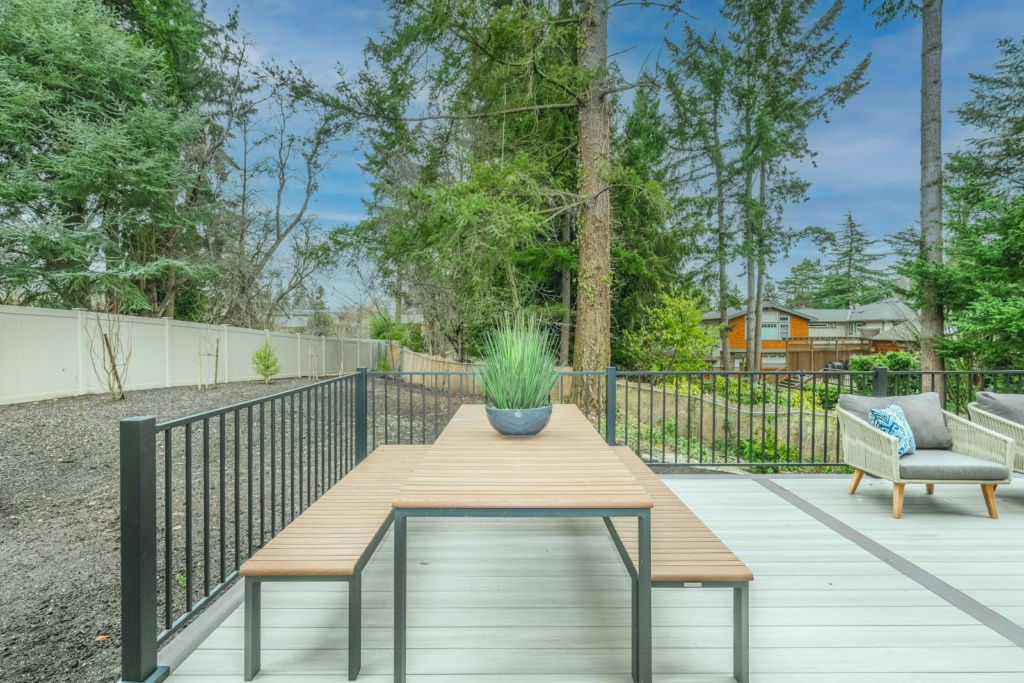
2026 installed cost
$50–$200 per linear foot
Most straightforward residential aluminum railing projects fall around $70–$130 per linear foot installed. Premium finishes, difficult stairs, fascia-mounted posts, glass or rod infill, and extensive structural work can move the price toward the upper end.
Aluminum deck railing combines a clean appearance with low maintenance and corrosion resistance. It normally costs more than basic wood, vinyl or entry-level composite railing, but it avoids routine painting or staining and works well where homeowners want slim profiles and open sightlines.
This guide separates the cost of the complete railing system from installation, explains why quotes vary, and provides planning totals for common railing lengths. For a broader comparison, see our deck railing cost guide.
In this Cost Guide
Aluminum Deck Railing Cost at a Glance
| Project level | Installed cost per linear foot | Typical scope |
|---|---|---|
| Value / panelized | $50–$75 | Stock colors, straight level runs, standard pickets and simple surface-mount posts |
| Mid-range | $75–$130 | Heavier profiles, upgraded top rails, stairs, more corners or better finish choices |
| Premium / custom | $130–$200+ | Glass, mesh or rod infill, custom fabrication, complex stairs, fascia mounts or coastal specifications |
These are national planning ranges, not a quote. Current national cost data places professionally installed aluminum railing at roughly $50–$200 per linear foot. Local labor, freight and code requirements can create a wide spread, so compare complete written estimates rather than panel prices alone.
Aluminum Railing Cost by Project Size
Measure the actual perimeter that needs a guard, exclude openings, and add the sloping length of stair rails. The examples below multiply the full installed range by common railing lengths.
| Railing length | Estimated installed total | Example layout |
|---|---|---|
| 30 linear feet | $1,500–$6,000 | Small platform or two open sides of a compact deck |
| 50 linear feet | $2,500–$10,000 | Typical three-sided rectangular deck |
| 65 linear feet | $3,250–$13,000 | Larger deck with a short stair run |
| 100 linear feet | $5,000–$20,000 | Large, elevated or multi-zone deck |
Budget note: A low per-foot panel price rarely represents the finished project. Posts, brackets, caps, gate hardware, stair components, freight, tax, permits, demolition and repairs may be separate line items.
What Is Included in the Price?
Railing panels, rails and balusters
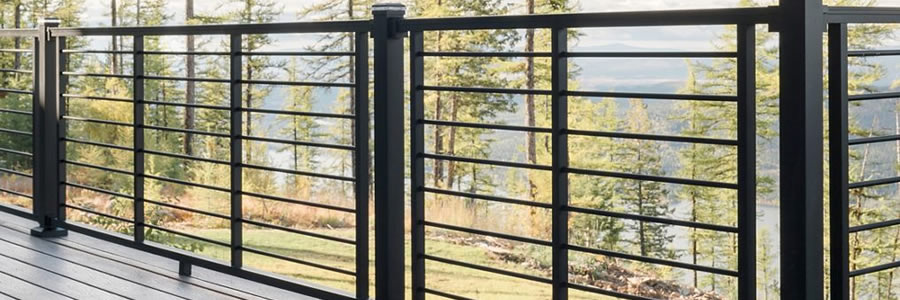
A standard system normally includes top and bottom rails plus vertical aluminum balusters. Factory-assembled panels can reduce site labor. Premium systems may substitute glass, stainless mesh or horizontal rods, increasing both material and handling costs.
Posts, mounts and hardware
Posts, base plates, brackets, post skirts and caps are easy to overlook when pricing a system online. Corner and end posts cost more per position than a continuous straight run. Fascia-mounted posts and concrete installations usually require different hardware and more labor than surface mounting to a prepared wood frame.
Installation labor
National railing data commonly places labor around $10–$50 per linear foot, but difficult access, steep stairs, custom cuts and structural blocking can raise that figure. A competent installer must confirm that the deck framing can carry guard loads and that every post connection matches the system instructions.
Removal, repair and permits
Replacing an existing rail can uncover rot, inadequate blocking or water damage. Ask whether demolition, disposal, framing repairs, permit fees and inspection coordination are included. A replacement rail fitted to unsound framing is not a complete repair.
Factors That Change Aluminum Railing Cost
- System grade and metal profile: thicker, more architectural profiles and concealed fastening systems generally cost more.
- Infill: vertical pickets are usually the simplest option; glass, mesh and rod infill add material and installation time.
- Number of posts and corners: short sections with many turns cost more per foot than long straight runs.
- Stairs: sloped rails require precise measuring, cutting and dedicated brackets.
- Mounting method: fascia mounting can preserve deck space but often needs additional blocking and specialist hardware.
- Height: 42-inch systems normally use more material than 36-inch systems.
- Finish and environment: custom colors and specifications intended for salt-air exposure may carry a premium.
- Freight: long rail sections and bulky panels can make shipping a meaningful part of the total.
Aluminum Railing Brands and Styles
Major product families include Trex Signature, Deckorators ALX, Fortress, Westbury, Key-Link and other regional systems. Availability differs by dealer and location. Compare the complete bill of materials, not only the nominal six- or eight-foot rail kit.
Trex currently positions Signature as a premium aluminum platform with vertical baluster, glass, mesh and rod configurations. Its published system information shows 36- and 42-inch heights and multiple rail lengths. Other brands offer similar choices, but components are not interchangeable; posts, brackets, rails and infill should come from an approved tested system unless the manufacturer says otherwise.
Vertical balusters
This is the most familiar and often the most economical aluminum option. Square or round balusters suit traditional and transitional homes and are straightforward to clean.
Glass, mesh and rod infill
These options create a more contemporary appearance and preserve views, but the cost and installation detail differ substantially. Glass is heavier and needs regular cleaning. Horizontal rod systems must meet the same opening and load rules as other guards.
Lighting and cocktail rails
Integrated post-cap lighting, under-rail lighting and wide drink rails can improve usability but require extra components, electrical planning and labor. Ask for them as separate quote options so the base railing cost remains clear.
Code, Height and Installation Planning
Model residential codes commonly require guards where a walking surface is more than 30 inches above the floor or grade within the specified horizontal distance. Typical residential guard height is 36 inches, while some jurisdictions and many commercial applications require 42 inches. Openings generally must prevent a four-inch sphere from passing through.
These are planning principles, not a substitute for local approval. Building departments can amend model codes, and stair handrail rules are separate from guard requirements. Confirm the adopted code, required permits and inspection points before ordering a system.
DIY vs. Professional Installation
Panelized aluminum systems can be suitable for an experienced DIYer who is comfortable locating framing, installing structural blocking and laying out posts accurately. The finish is unforgiving: a small layout error can leave rails too short or posts visibly out of line.
Professional installation is the safer choice for elevated decks, long stairs, concrete bases, fascia mounts, curved layouts or framing that needs repair. Require the contractor to identify the product system and installation standard in the written proposal.
Maintenance and Expected Life
Powder-coated aluminum does not require staining and is resistant to rust, but it is not maintenance-free. Wash it periodically with mild soap and water, remove leaves and salt deposits, and inspect post bases, fasteners and rail connections. Avoid abrasive cleaners unless the manufacturer approves them. Scratches, coating damage and dissimilar-metal contact deserve prompt attention, especially near the coast.
How to Compare Aluminum Railing Quotes
- Use the same measured railing length and stair count for every bidder.
- Confirm whether posts, brackets, caps, gates and freight are included.
- Ask which areas of framing will be opened or reinforced.
- Separate removal and repair allowances from new-system installation.
- Check the exact product warranty and any labor warranty.
- Confirm permits, cleanup and disposal in writing.
Use the deck cost estimator and request local quotes once you have a measured layout and preferred railing style.
Aluminum Deck Railing FAQs
Is aluminum railing worth the cost?
It can be a strong long-term choice when low maintenance, slim profiles and corrosion resistance matter. It is less compelling if the project is driven only by the lowest initial price.
Does aluminum deck railing rust?
Aluminum does not rust like ferrous steel, but its coating can be damaged and the metal can corrode under aggressive conditions. Correct fasteners, isolation from incompatible metals and manufacturer-approved care are important.
Can aluminum railing be installed on a wood deck?
Yes. Most residential systems include surface-mount options for wood framing, but the posts must connect to adequate structural blocking—not only to deck boards.
Can I mix aluminum posts with composite rails?
Only when the manufacturer offers and approves that configuration. Do not assume components from different product lines have been tested together.
How many quotes should I obtain?
Three comparable written quotes usually provide a useful local benchmark. Give each contractor the same plan and product assumptions so the totals are meaningful.
Sources and Cost Methodology
We use a broad national planning range because railing cost varies sharply by system, labor market and layout. The 2026 figures were checked against national installed-cost data and current manufacturer product information, then rounded to avoid false precision. Taxes, freight, permits, repairs and unusual engineering may not be included.
Substantively reviewed: September 10, 2026