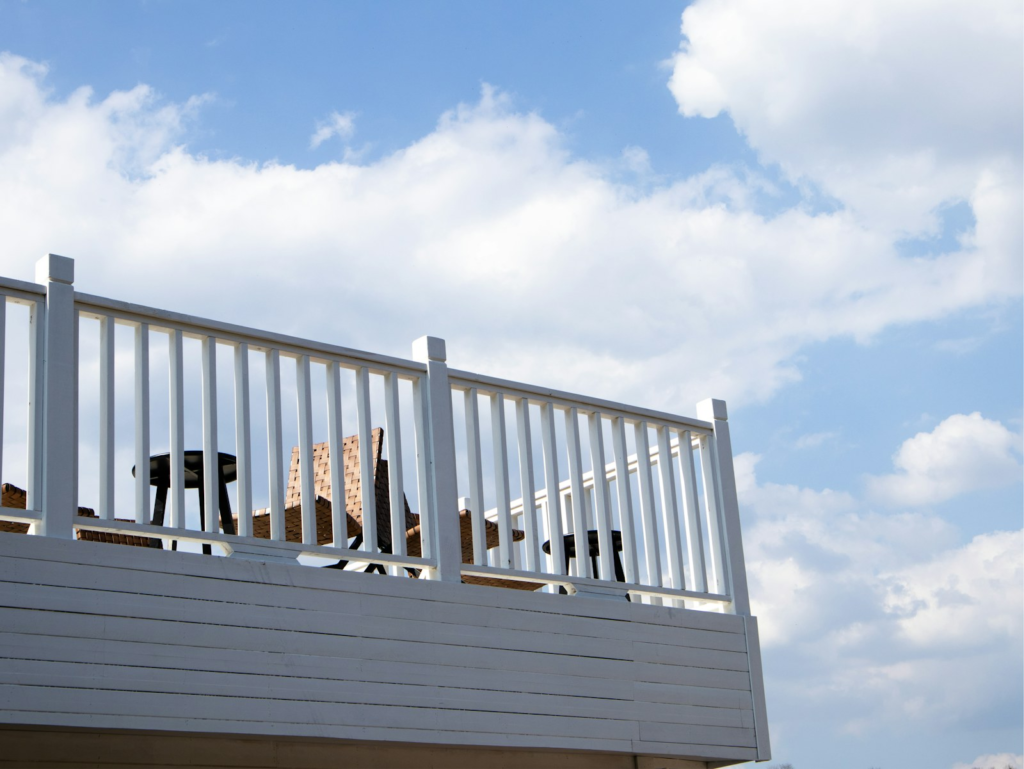
CALI—formerly widely known as Cali Bamboo—currently sells TruOrganics composite decking. The company’s 2026 plank catalog shows standard, square-edge, and extra-wide TruOrganics boards in Denali, Yosemite, Sedona, and Glacier. The older BamDeck 4G range is not shown in the current plank catalog, so it should be treated as a legacy product unless a CALI representative confirms otherwise.
For planning, expect CALI TruOrganics deck boards to cost about $10–$19 per square foot. A professionally installed new deck typically falls around $35–$70 per square foot, including boards, a conventional pressure-treated substructure, standard fasteners, and labor. Elevated framing, extensive stairs, railings, borders, difficult access, and premium finishing details can raise the total above that range.
Quick answer: TruOrganics is a four-side-wrapped wood-plastic composite made with a core of 60% reclaimed wood fiber and 40% recycled high-density plastic. It is not solid bamboo decking, despite the brand’s historic association with bamboo.
In this Cost Guide
CALI Decking Cost at a Glance
| Cost item | 2026 planning range | What is included |
|---|---|---|
| TruOrganics boards only | $10–$19 per sq. ft. | Standard, square-edge, or extra-wide boards before waste, freight, fasteners, framing, and labor |
| Professionally installed deck | $35–$70 per sq. ft. | Typical boards, pressure-treated framing, standard fastening system, and installation |
| Premium or complex project | $70+ per sq. ft. | Elevated or difficult framing, premium layouts, substantial stairs, lighting, or railing |
CALI currently asks customers to request a project quote rather than publishing a complete nationwide board price list. These figures are therefore national planning ranges built from CALI’s current product positioning, historic dealer prices, and current composite-deck market benchmarks. A delivered local quote may be higher or lower.
CALI Decking Cost by Project Size
The following examples use the $35–$70 installed planning range. They assume a straightforward rectangular deck with a new conventional substructure. Railings, demolition, unusual foundations, extensive stairs, and permit or engineering costs should be itemized separately.
| Deck size | Estimated installed cost | Typical use |
|---|---|---|
| 100 sq. ft. | $3,500–$7,000 | Small grilling space, landing, or compact townhouse deck |
| 144 sq. ft. | $5,000–$10,100 | A 12 × 12 dining or seating area |
| 200 sq. ft. | $7,000–$14,000 | A common single-zone backyard deck |
| 300 sq. ft. | $10,500–$21,000 | Dining and a separate seating zone |
| 400 sq. ft. | $14,000–$28,000 | A larger entertaining deck or outdoor room |
Use the deck cost estimator for an initial budget, then compare itemized local proposals using the same scope.
What CALI Decking Is Sold in 2026?
The current CALI plank catalog lists TruOrganics rather than the two-line TruOrganics/BamDeck structure described in older buying guides. This is an important change for anyone comparing a current quote or trying to match boards on an existing deck.
| Current profile | Approximate dimensions | Primary use |
|---|---|---|
| TruOrganics 3G | 5-7/16 in. wide × 12 ft. | Main deck surface with grooved edges for compatible hidden fasteners |
| TruOrganics square edge | 5-7/16 in. wide × 12 ft. | Borders, exposed edges, trim, steps, and stair nosings |
| TruOrganics 3G Wide | 8-1/4 in. wide × 8 ft. | Extra-wide visual format for selected deck layouts |
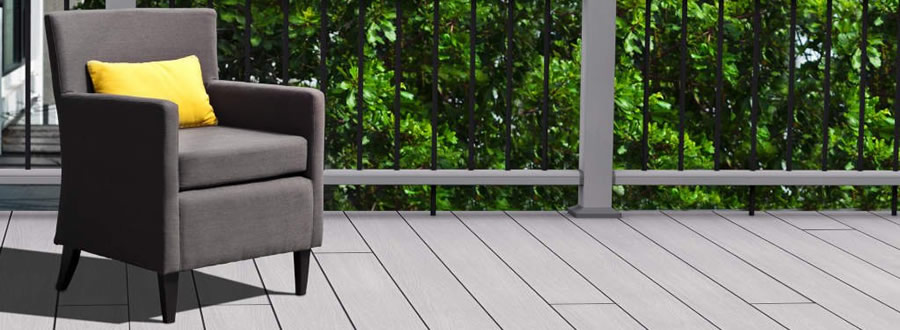
The current colors shown by CALI are Denali (deep brown), Yosemite (gray), Sedona (red-brown), and Glacier (light gray). Availability can differ by profile, quantity, and location, so confirm the complete bill of materials before selecting a color.
TruOrganics Construction and Features
TruOrganics uses a wood-plastic composite core made from 60% reclaimed wood fiber and 40% recycled high-density plastic. CALI describes the boards as having a protective four-sided wrap, a low-gloss wood-grain surface, and a 3G core intended to reduce weight while retaining strength.
The current standard grooved board is 12 feet long. Square-edge 12-foot boards are intended for areas where an exposed edge needs a finished appearance, while the extra-wide boards use an 8-foot format. This mix can influence waste: a layout designed around longer 16- or 20-foot boards from another brand may need more seams or breaker boards when converted to CALI’s current lengths.
CALI’s current product pages list a 25-year residential warranty. At least the current square-edge product specification also lists a 10-year commercial warranty. The written warranty, purchase date, owner eligibility, exclusions, installation requirements, and claim procedure control coverage—never rely only on the headline number.
What Happened to BamDeck 4G?
BamDeck 4G featured a core combining reclaimed bamboo fiber and recycled plastic. It appeared prominently in earlier CALI catalogs and in the original version of this guide. However, it was not listed among the current planks when we reviewed CALI’s catalog in September 2026.
Owners may still encounter remaining stock, used boards, old samples, and earlier dealer pages. Do not assume that a legacy BamDeck color or profile will match a current TruOrganics board. Before buying clearance material, confirm the quantity, batch consistency, compatible fasteners, warranty status, and availability of replacement boards.
What Changes the Installed Cost?
Board profile and waste
Extra-wide boards can create a distinctive appearance but do not automatically reduce the project cost. Board length, pattern, joins, border layout, stairs, and offcuts determine the true order quantity. A simple parallel deck may need roughly 7%–10% waste, while diagonal layouts and picture frames normally require more.
Framing and site conditions
A low rectangular platform costs less than an elevated deck requiring larger footings, beams, posts, bracing, engineering, guards, and stairs. Difficult access can increase excavation, material handling, and disposal labor. If the frame is being reused, the contractor should document its condition and code suitability before new boards are ordered.
Fasteners and finishing pieces
Hidden fasteners, start and stop clips, butt-seam clips, color-matched screws, square-edge boards, end caps, and fascia should appear in the material schedule. Small components can add a meaningful amount when multiplied across a full deck.
Railing and stairs
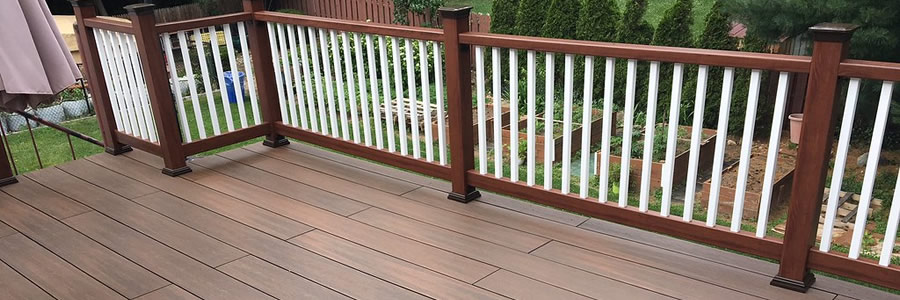
CALI currently lists matching railing and installation accessories, but railing is not included in board pricing. Price the railing by linear foot and list gates, stair rails, lighting, and structural posts separately. See the deck railing cost guide for current planning ranges.
CALI vs Other Composite Decking Brands
TruOrganics sits in the mid-to-premium composite market. Its recycled-content story, extra-wide option, and current 12-foot standard boards distinguish it from some competitors, but the best choice depends on local availability, installed price, color, board length, installer experience, and warranty terms.
- Trex generally offers broader national distribution and multiple price tiers.
- TimberTech composite provides several capped-composite collection levels and longer-board options.
- TimberTech Advanced PVC uses cellular PVC rather than a wood-plastic composite core.
- Fiberon spans entry-level composite through premium PVC.
- Deckorators includes mineral-based composite options in addition to conventional composite.
Request physical samples and view them outside in sun and shade. Screen colors are not a reliable substitute, and darker boards can become noticeably hot in direct sunlight.
Installation and Maintenance
Installers should follow CALI’s current instructions for the exact board and local building code. Confirm joist spacing, stair-stringer spacing, ventilation, drainage, end and side gaps, approved fasteners, square-edge placement, and fascia attachment. Composite decking is not structural framing.
Routine care normally means sweeping and washing with methods permitted by CALI’s current care guide. Clean food, grease, mildew, leaves, and other contamination promptly. Do not assume that a pressure-washer setting, solvent, ice treatment, grill mat, or cleaner approved by another decking manufacturer is acceptable for TruOrganics.
How to Compare CALI Decking Quotes
- Require the exact color, profile, board length, quantity, and product code.
- Separate decking, framing, railing, stairs, fascia, fasteners, demolition, disposal, freight, tax, permits, and labor.
- Ask what waste percentage is included and why it suits the layout.
- Confirm that all required square-edge boards and finishing pieces are available.
- Check lead times before demolition or contractor scheduling.
- Compare at least two or three itemized proposals based on the same drawings.
- Obtain the current written residential warranty and installation guide.
Frequently Asked Questions
How much does CALI TruOrganics decking cost?
Budget approximately $10–$19 per square foot for the boards and $35–$70 per square foot for a professionally installed new deck. CALI uses quote-based pricing, so the delivered cost can vary with profile, location, freight, quantity, and availability.
Is CALI decking made from bamboo?
Current TruOrganics decking uses reclaimed wood fiber and recycled high-density plastic. The legacy BamDeck range used reclaimed bamboo fiber, which is one reason older guides often describe all CALI decking as “bamboo decking.”
Is BamDeck 4G still available?
BamDeck 4G was not displayed in CALI’s current plank catalog at our September 2026 review. Some remaining or legacy stock may exist, but buyers should verify status, quantity, compatibility, and warranty directly before ordering.
What colors does TruOrganics come in?
CALI’s current catalog shows Denali, Yosemite, Sedona, and Glacier. Not every profile or length may be available in every color at every location.
What warranty does CALI decking have?
Current TruOrganics product pages advertise a 25-year residential warranty. The current square-edge specification also lists a 10-year commercial warranty. Read the warranty document for coverage, exclusions, ownership rules, and claim requirements.
Can CALI decking be installed over an existing frame?
Potentially, but only after the frame has been inspected for rot, corrosion, span, joist spacing, connections, foundations, drainage, and current-code suitability. A surface-only replacement quote should identify any corrective framing separately.
Sources and Cost Methodology
We reviewed CALI’s current decking catalog, individual TruOrganics product specifications, warranty resources, and current composite-deck cost benchmarks. The prices are Deck Cost Guide’s national planning ranges, not figures copied from one retailer. Local contractor and delivered-material quotes remain the best evidence for a specific project.
- CALI: current composite decking overview
- CALI: current TruOrganics plank catalog
- CALI: current Denali TruOrganics specification
- CALI: decking warranty resources
- HomeGuide: current national composite-deck cost benchmark
Product details and pricing were reviewed in September 2026. See How We Research Deck Costs for our editorial and affiliate-disclosure policy.