Aluminum decking typically costs $15 to $30 per square foot for the deck boards and about $25 to $45 per square foot for a straightforward installed surface system in 2026. A complete new aluminum deck—including a purpose-built support structure and more complex system components—can cost roughly $100 to $125 per square foot. Railings, stairs, demolition and difficult site work may add to those figures.
That large price spread is not a contradiction: “aluminum deck cost” can mean boards only, resurfacing over a suitable structure, a watertight deck surface, or an entirely new engineered deck. Always check what a quoted square-foot price includes.
Aluminum is a premium alternative to composite, PVC and natural wood. It does not rot or attract wood-destroying insects, and many products use a durable powder-coated or textured finish. Some interlocking systems also manage water to create a drier space below, but not every aluminum product is watertight.
In this Cost Guide
Aluminum Deck Cost at a Glance
| Project scope | Typical 2026 cost | What the range generally includes |
|---|---|---|
| Aluminum deck boards | $15–$30 per sq. ft. | Surface planks only; coating, profile and drainage design affect price |
| Basic installed surface | $25–$45 per sq. ft. | Boards, system fasteners and straightforward installation over a suitable support structure |
| Complete new aluminum deck | $100–$125 per sq. ft. | A new premium deck system with its required joist-support base; project specifications vary |
| Common additions | Priced separately | Railings, stairs, demolition, engineering, lighting and major site preparation |
Do not add the rows together. They describe different scopes. A manufacturer quote for planks cannot be compared directly with a contractor proposal for a complete elevated deck. Request an itemized breakdown and use our deck cost estimator for an initial project comparison.
Complete Aluminum Deck Cost by Size
The examples below use the $100 to $125 per square foot benchmark for a complete new aluminum deck system with a new support base. They are deliberately separate from board-only and resurfacing prices.
| Deck size | Deck area | Estimated complete-system cost |
|---|---|---|
| 10 × 10 feet | 100 sq. ft. | $10,000–$12,500 |
| 12 × 12 feet | 144 sq. ft. | $14,400–$18,000 |
| 10 × 20 feet | 200 sq. ft. | $20,000–$25,000 |
| 15 × 20 feet | 300 sq. ft. | $30,000–$37,500 |
| 20 × 20 feet | 400 sq. ft. | $40,000–$50,000 |
These examples exclude unusually elaborate railings, long stair runs and major demolition. If you are installing aluminum boards over a compatible existing structure, use the installed-surface range and obtain a structural assessment first.
What Is Aluminum Decking?
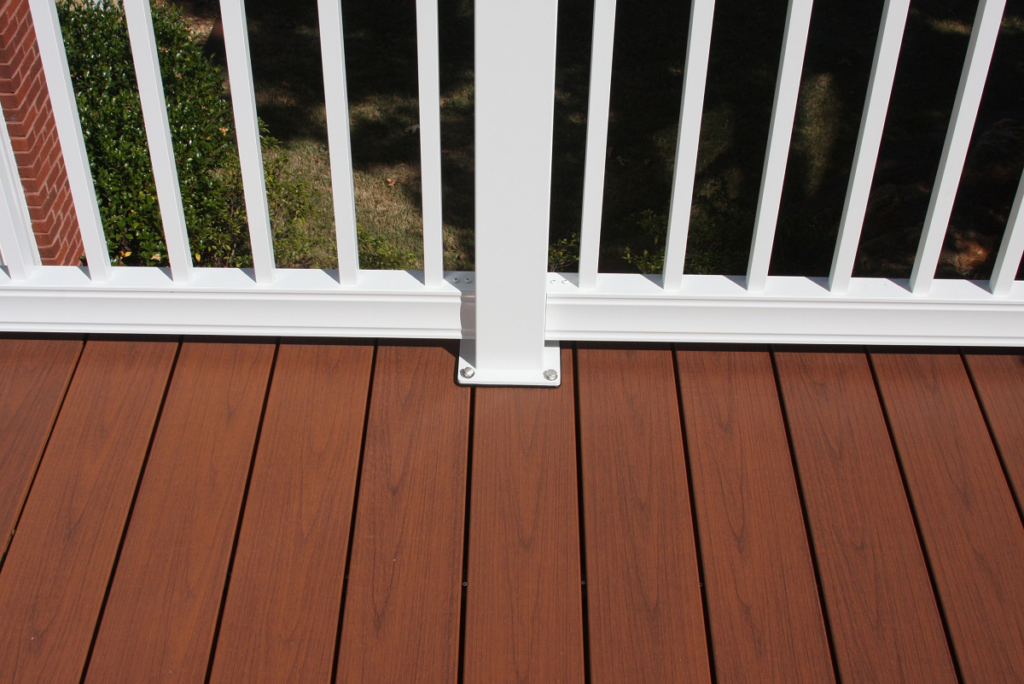
Aluminum deck boards are extruded into hollow, ribbed or interlocking profiles and protected by a product-specific factory finish. Profiles, span ratings, fastening methods and surface textures differ among manufacturers. The system may be designed as an open-joint surface, a water-managing deck or a watertight assembly.
A textured coating can improve traction and change how the surface feels and sounds underfoot. Color choice, sun exposure and coating technology affect heat gain; no material should be described as universally cool in direct summer sun.
Load capacity, slip resistance, fire performance and warranty coverage are product-specific. Use the manufacturer’s current technical documents for the exact board and assembly rather than applying one brand’s claims to all aluminum decking.
What Changes the Price?
Open-joint or watertight system
An open-joint plank system allows water to pass between boards. Interlocking water-management products channel runoff toward the edge of the deck and can create usable space below when correctly detailed. Watertight products generally cost more and require careful slope, perimeter, gutter and penetration details.
Surface finish and color
Premium powder coats, textured elastomeric finishes and wood-look colors can increase material prices. Ask how scratches and field cuts are treated and whether touch-up work affects the warranty.
Support structure
Some products install over properly spaced wood or metal joists; other projects use a matched aluminum substructure. Joist spacing, span rating, corrosion compatibility and fastening requirements must follow the selected system. A full aluminum support system costs more than boards installed over an approved existing frame.
Deck height and complexity
Elevated decks require more structural work, access equipment and fall protection. Multiple levels, angled walls, borders, penetrations, curved edges and complicated drainage details add labor and waste.
Railings and stairs
Aluminum decking does not automatically include an aluminum guardrail. Railing is normally priced by linear foot, and stairs require separate framing, tread and guard details. Compare options in our aluminum railing cost guide.
Freight and installer availability
Aluminum boards are often distributed through specialist dealers. Long lengths, residential delivery and regional installer availability can materially change the quote. Confirm freight, unloading and storage before ordering.
Aluminum Decking Pros and Cons
Advantages
- No rot or insect damage: Aluminum does not absorb water like wood and is not a food source for termites.
- Low routine maintenance: It does not need wood stain or sealer; cleaning and inspection are still required.
- Long service potential: A correctly specified and installed system can provide decades of use, subject to coating, environment and structural details.
- Lightweight material: Extruded aluminum has a high strength-to-weight ratio, though the complete structure must still be engineered for its loads.
- Water-management options: Certain interlocking products can direct water away and help create a drier area beneath an elevated deck.
- Consistent factory finish: Boards are available in defined colors and textures without natural knots or grain variation.
- Recyclability: Aluminum is recyclable, although the environmental impact depends on recycled content, manufacturing and transport.
Disadvantages
- High initial cost: A complete aluminum deck is among the most expensive residential decking systems.
- Limited local availability: Product choice and trained installers vary by region.
- System-specific installation: Details cannot safely be improvised or mixed across manufacturers.
- Coating damage: Scratches and cut edges may require approved repair procedures.
- Potential noise or movement: Poor fastening, incompatible framing or missed isolation details can produce squeaks or movement.
- Metal appearance: Even wood-look finishes do not reproduce natural timber exactly.
Aluminum vs. Composite, PVC and Wood
Composite decking and PVC decking are usually less expensive than a complete aluminum system and offer a larger range of wood-look colors. They use manufacturer-specific expansion gaps and fastening systems and may have different heat and scratch characteristics.
Pressure-treated wood, cedar and redwood provide authentic timber appearance at a lower initial price in many markets. Wood requires more finish decisions and is vulnerable to moisture when details or maintenance fail.
Aluminum becomes most compelling when low routine maintenance, noncombustible material, long spans or integrated water management are important. Verify any fire or structural requirement against the exact tested assembly and local code.
Installation Details That Matter
- Use one complete system. Follow the selected manufacturer’s current board, trim, fastener, framing and drainage instructions.
- Confirm joist spacing and spans. Do not reuse wood-deck spacing or load assumptions without checking the product tables and project design.
- Allow for movement. Aluminum expands and contracts with temperature. Required end gaps and fastening slots depend on board length and installation temperature.
- Prevent galvanic corrosion. Isolate incompatible metals and use approved fasteners and connectors, especially in coastal or chemically aggressive environments.
- Cut with the correct equipment. Use a blade rated for non-ferrous metal, control sharp swarf and protect finished surfaces.
- Build drainage deliberately. A water-managing system needs the specified slope, end treatment, gutters and flashing. Penetrations must use approved details.
- Address house connections. Ledger attachment and flashing remain critical even when the deck surface itself is metal or watertight.
Some systems are suitable for experienced DIY installation, but elevated structures and watertight assemblies benefit from a trained installer. Permits, engineering and inspections depend on the design and jurisdiction.
Waterproof and Dry-Space Aluminum Decks
Manufacturers use terms such as waterproof, watertight and water-managing differently. A deck board profile may shed water, but the completed assembly also depends on seams, slope, perimeter trim, wall flashing, posts, penetrations and guttering.
If the area below will become finished living or storage space, ask the designer to define the required performance and how leaks can be inspected and repaired. A dry-space deck should not be marketed as a substitute for a building roof unless the complete tested assembly is approved for that use.
Care and Maintenance
Wash the surface with a mild cleaner and method approved by the manufacturer. Remove leaves and debris from channels, gutters and drains so water can leave the deck. Avoid abrasive pads, strong solvents or incompatible chemicals that could dull or soften the coating.
Inspect annually for loose fasteners, movement, coating damage, blocked drainage and deteriorated sealant or flashing. Coastal sites need particular attention to fastener and metal compatibility. Use only the manufacturer’s approved touch-up process; unauthorized coatings may create adhesion problems or affect warranty coverage.
Aluminum does not need staining or sealing, but “low maintenance” does not mean maintenance-free. The support structure, guards, stairs and house connection still require periodic inspection.
How Long Does Aluminum Decking Last?
Aluminum decking can provide several decades of service when the alloy, coating, fasteners and structural system are suitable for the environment. No responsible estimate should say it lasts indefinitely. Finish wear, corrosion at incompatible connections, movement, drainage failures and damage can all shorten service life.
Warranty periods vary by product and may separate structural performance from finish coverage. Read the current written warranty, including coastal exclusions, transfer rules, approved installers and maintenance requirements.
DIY or Professional Installation?
A mechanically inclined homeowner may be able to install a straightforward manufacturer-designed surface system. The work still requires accurate layout, safe metal cutting, expansion allowances and compatible fasteners.
Use a qualified contractor or engineer for elevated decks, new structural systems, large spans, coastal exposure, complex drainage and any deck intended to keep finished space dry below. Ask whether the installer has completed projects with the exact brand you are considering.
How to Compare Aluminum Deck Quotes
Request at least three itemized proposals based on the same plan. Each quote should identify:
- Manufacturer, product line, plank profile, color and coating
- Whether the system is open-joint, water-managing or warranted watertight
- Deck area, board direction, board lengths, trim and waste allowance
- Support structure, joist spacing, spans, ledger, footings and engineering
- Fasteners, isolation materials and corrosion specification
- Slope, flashing, gutters, downspouts and penetration details
- Railings, stairs, lighting and accessories as separate line items
- Freight, unloading, demolition, disposal, permits and inspections
- Product, finish and workmanship warranties
Compare the scope before comparing the total. One estimate may be for boards over existing joists while another includes a complete aluminum structure.
Aluminum Decking FAQs
How much do aluminum deck boards cost?
Current planning figures place aluminum boards around $15 to $30 per square foot. Profile, coating, color, drainage design, freight and order size all affect material cost.
How much is a complete aluminum deck?
A national complete-system benchmark is about $100 to $125 per square foot when a new support base is included. A 12-by-12-foot project at that scope is approximately $14,400 to $18,000 before unusually expensive additions.
Is every aluminum deck waterproof?
No. Some boards use open joints; others interlock to manage water. Watertight performance depends on the complete installed assembly, not the metal planks alone.
Does aluminum decking get hot?
Any deck can become hot in direct sun. Temperature depends on color, coating, ventilation, sun exposure and climate. Compare physical samples outdoors before choosing a finish.
Can aluminum decking go over a wood frame?
Some products can install over an approved wood structure at specified joist spacing. The frame must be sound, properly flashed and compatible with the fasteners and movement requirements. Follow the selected manufacturer’s instructions.
Is aluminum decking noisy?
A correctly coated and fastened system should not create excessive noise in normal use, but poor fastening, movement or a hard uncoated profile can sound different from wood. Ask to visit a completed installation if sound is a concern.
Sources and Cost Methodology
We compared current national cost datasets that define different project scopes. HomeGuide’s 2026 deck-cost data reports approximately $100 to $125 per square foot for a complete aluminum deck with its joist-support base. Current HomeAdvisor and industry cost references place aluminum boards around $15 to $30 per square foot, while basic installation benchmarks are lower than a full new deck.
We also checked current manufacturer information from Craft-Bilt, Wahoo Building Products and Versadeck to verify that profiles, coatings, drainage designs, spans and warranties are system-specific. The size examples are our calculations from the clearly labeled complete-system range.
Prices are national planning estimates and local proposals may differ substantially. See How We Research Deck Costs for our editorial and affiliate-disclosure policy.