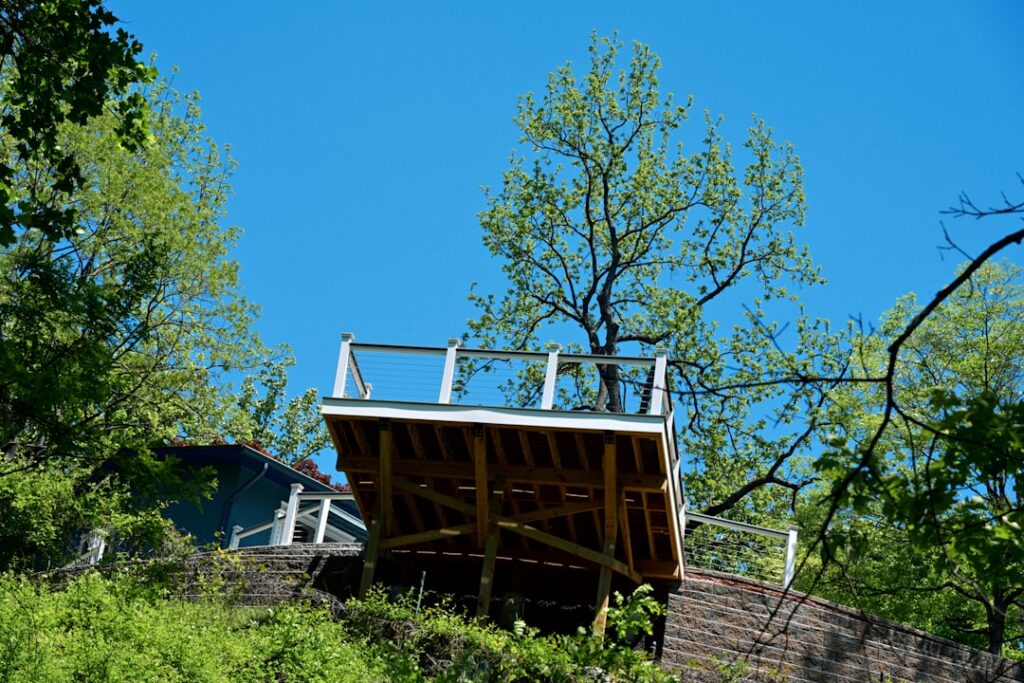
An elevated deck costs more than a simple ground-level platform because its footings, posts, beams, connections, stairs and guard system must work together at height. In 2026, most professionally built elevated residential decks have a practical planning range of about $40 to $90 per square foot installed. A straightforward lower raised deck using pressure-treated wood may start nearer $30 to $50 per square foot, while second-story, composite, hardwood and highly engineered projects can exceed $100 per square foot.
Use the figures below for early budgeting, not structural design. Height, soil, attachment details, stair geometry, railing choice, access and locally adopted code requirements can change the final proposal substantially.
In this Cost Guide
Elevated Deck Cost at a Glance
| Elevated deck type | Typical installed cost | Planning scope |
|---|---|---|
| Lower raised pressure-treated deck | $30–$60 per sq. ft. | Straightforward rectangle, common wood, standard stairs and railing |
| Second-story pressure-treated deck | $50–$70 per sq. ft. | Taller posts, larger foundations, extensive guard and a full stair run |
| Composite or PVC deck | $55–$100 per sq. ft. | Structural frame with low-maintenance boards and compatible details |
| Premium hardwood deck | $65–$110 per sq. ft. | Dense hardwood, specialist fasteners and higher installation labor |
| Aluminum deck system | $110–$150+ per sq. ft. | Premium decking and purpose-designed support or drainage components |
The figures assume a complete deck rather than surface boards alone. Confirm whether each proposal includes design, permits, excavation, concrete, framing, decking, fascia, stairs, railing, disposal and final inspection.
Elevated Deck Cost by Size
The following totals apply the broad $40–$90 per-square-foot planning range. Simple pressure-treated construction may cost less; premium materials, unusually tall construction or difficult foundations may cost more.
| Deck size | Planning cost range | Typical use |
|---|---|---|
| 12 × 12 feet (144 sq. ft.) | $5,800–$13,000 | Compact dining or conversation deck |
| 10 × 20 feet (200 sq. ft.) | $8,000–$18,000 | Dining plus grill or compact seating |
| 15 × 20 feet (300 sq. ft.) | $12,000–$27,000 | Two practical furniture zones |
| 20 × 20 feet (400 sq. ft.) | $16,000–$36,000 | Larger entertaining deck with multiple zones |
Size alone does not describe an elevated deck. A compact second-story project with a long switchback stair and premium glass railing can cost more than a larger, lower rectangular deck with one short stair.
Costs by Material and Project Type
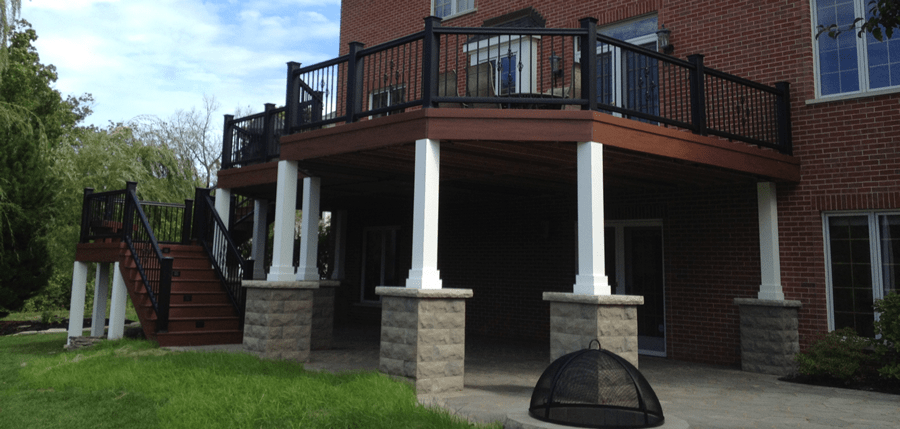
Decking material affects the surface price, but the support structure is a larger part of an elevated project than many homeowners expect. Posts, beams, joists, hardware, foundations and guards do not disappear when a lower-cost board is chosen.
Pressure-treated wood
Pressure-treated lumber is usually the lowest-cost structural and surface option. It can be a sensible choice when initial budget matters and the homeowner accepts periodic cleaning and protective finishing. Board joints, end grain and areas around fasteners require ongoing inspection.
Composite and PVC
Low-maintenance boards increase the initial price but reduce routine finishing. Follow the current manufacturer instructions for joist spacing, ventilation, expansion gaps, stair treads and fastening. The frame still needs moisture management and periodic inspection even when the visible boards resist decay.
Cedar and hardwood
Cedar offers natural appearance at a mid-to-premium price, while Ipe and other dense hardwoods cost more to purchase, transport and install. Confirm board grade, sourcing, fastener system and finishing expectations in writing.
Aluminum
Aluminum can create a low-maintenance, noncombustible walking surface and may integrate water management, but it is a specialist system with a much higher material price. Installer availability and shipping can affect local bids.
Why Elevated Decks Cost More
| Cost factor | Typical effect | Why it matters |
|---|---|---|
| Height and access | Moderate to high | Scaffolding, lifts and slower material handling increase labor |
| Footings and soil | Moderate to high | Depth, diameter, excavation and engineering vary by site and climate |
| Building attachment | Moderate | Ledger, flashing and lateral connections need compatible existing construction |
| Stairs | High | Long runs, landings, rails and foundations add structure and detail work |
| Guard system | Moderate to high | More perimeter and premium infill can materially change the total |
| Under-deck finish | Optional but significant | Drainage, ceiling, lighting, paving and screening create a second project area |
Attached vs. Freestanding Elevated Decks
Attached deck
An attached deck normally uses a ledger at the house, but only when the wall construction and approved details support that approach. Correct flashing and water management are essential. Masonry veneer, cantilevered floors and some cladding systems need specialist details or may make a freestanding design preferable.
Freestanding deck
A freestanding elevated deck uses its own beam and foundation near the house rather than relying on a ledger. It is not structurally simple merely because it is detached: tall posts, lateral stability, foundations and the gap beside the building still require careful design.
Ask the designer to state which approach is being used and how the deck resists gravity, lateral and uplift loads. Do not allow a contractor to choose the attachment method informally after construction starts.
Stairs and Railing
Elevated decks commonly need a guard around open edges and a compliant handrail along qualifying stairs. A guard helps prevent falls; a handrail provides a continuous graspable surface. They may form part of one assembly, but they are not the same component.
Long stair flights can require landings, additional foundations and more railing. Position stairs early in the design so they do not block windows, utilities, walkways or the best use of the ground-level area. Our Deck Railing Cost Guide compares material costs and explains guard-versus-handrail planning.
Using the Space Below
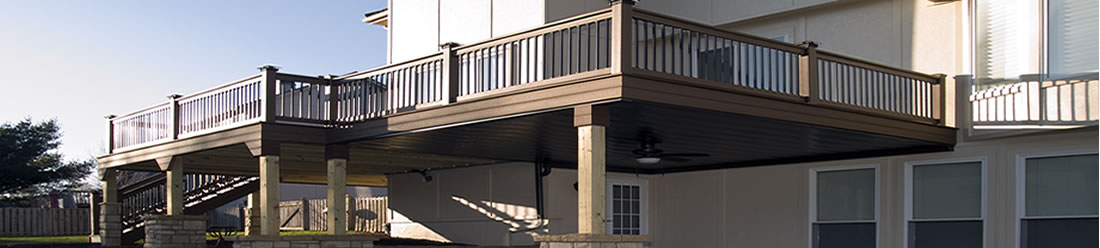
An elevated deck can create valuable shade or a covered patio below. If that space matters, plan it before framing. Retrofitting drainage around beams, posts and utilities is usually more difficult than coordinating it during construction.
- Open utility area: gravel and good drainage provide a simple low-maintenance finish.
- Dry patio: an approved under-deck drainage system collects water and routes it to gutters or drains.
- Finished outdoor room: ceiling, lighting, fans, outlets and paving require coordinated electrical and moisture details.
- Storage: maintain ventilation, inspection access and safe storage practices.
Water-management products should not conceal leaks or prevent inspection of structural connections. Confirm maintenance and cleanout access.
Design, Permits and Safety
Elevated decks have consequences if a connection fails, so generic span charts or an online plan should not be treated as approval for a specific property. The locally adopted building code, soil conditions, loads, species and grade of lumber, hardware, exposure and house construction all matter.
Before work begins:
- Confirm permits, setbacks, property lines and utility locations.
- Obtain a dimensioned plan showing footings, posts, beams, joists, ledger or freestanding support, lateral connections, stairs and guards.
- Use connectors and fasteners compatible with treated lumber and the local environment.
- Follow current decking and railing manufacturer instructions.
- Schedule required footing, framing and final inspections before work is concealed.
- Use a qualified engineer where the jurisdiction or site conditions require one.
Comparing Elevated-Deck Quotes
Give bidders the same plan and written finish schedule. The proposal should identify:
- Deck dimensions, height and structural design basis.
- Footing assumptions and allowances for unexpected soil or rock.
- Ledger and flashing method or freestanding configuration.
- Exact decking, fascia, railing and fastener products.
- Stair width, landing arrangement and handrail scope.
- Under-deck drainage or ground finish, if included.
- Permit, engineering, demolition and disposal responsibilities.
- Warranty, payment milestones and change-order procedure.
Compare omissions as well as totals. One quote may include railing, finished stairs and permits while another presents them as later additions.
Elevated Deck Cost FAQs
How much does a 200-square-foot elevated deck cost?
A practical 2026 planning range is about $8,000 to $18,000 for many wood or composite projects. A lower, simple pressure-treated deck may cost less, while a second-story deck with long stairs and premium railing may cost more.
Does an elevated deck always need railing?
Many elevated decks require guards, but the threshold, height, openings and stair requirements depend on the locally adopted code and amendments. Confirm the exact site conditions with the permitting authority before ordering materials.
Is a freestanding elevated deck cheaper?
Not necessarily. Avoiding a ledger can simplify the house connection, but the deck needs an additional beam, posts, footings and a complete lateral-stability design. Compare both approaches for the actual building and site.
Can the space beneath an elevated deck stay dry?
Yes, with a properly designed under-deck drainage system and safe discharge point. Include it in the original design so framing, ceiling, gutters and maintenance access are coordinated.
Sources and Cost Methodology
Deck Cost Guide developed these ranges by comparing current national deck-cost reporting with the additional structure, access, stairs and guard requirements typical of elevated work. They are our editorial planning ranges, not prices copied from a single contractor. Local labor, soil, height, materials and engineering can produce different bids.
- HomeGuide: Cost to build a deck — current national prices by size, material and deck type.
- American Wood Council DCA 6 — prescriptive residential wood-deck reference; local adoption and project eligibility must be confirmed.
- International Code Council digital codes — model-code reference library.
Last substantively reviewed: September 2026. The locally adopted code, approved plans and site-specific engineering take precedence over general online guidance.