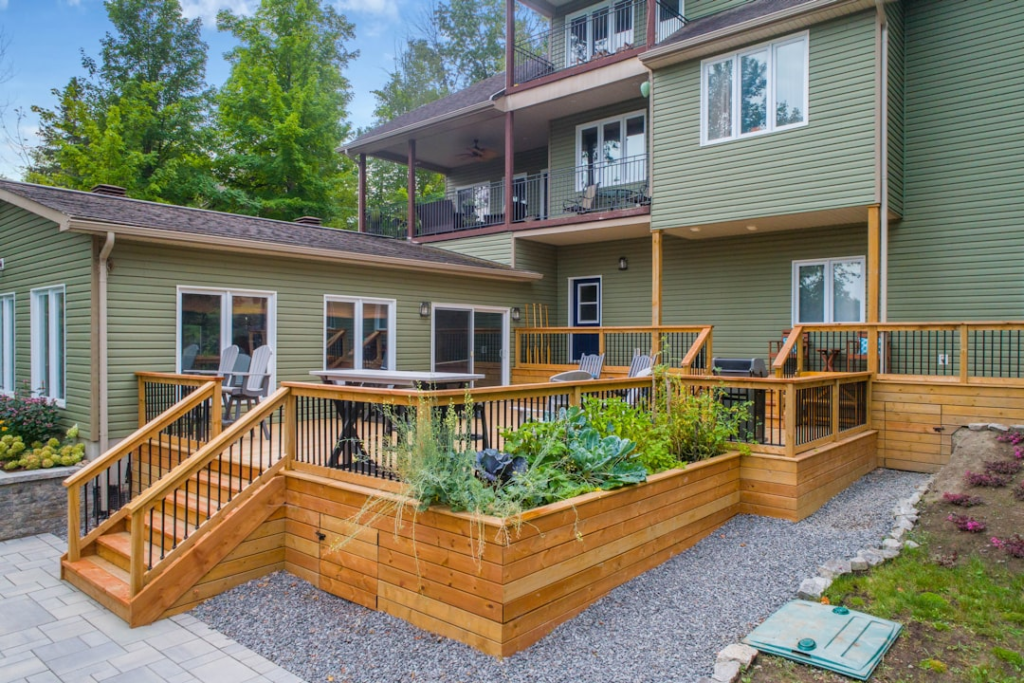
A professionally installed cedar deck costs about $30–$50 per square foot in 2026 for a straightforward U.S. project. A 200-square-foot cedar deck therefore has a practical planning range of roughly $6,000–$10,000, before expensive railings, long stair runs, demolition or unusually difficult foundations.
Cedar appeals to homeowners who want real wood grain, a lighter board and a warmer appearance than pressure-treated lumber. It is naturally resistant to decay, but it is not maintenance-free. Species, grade, moisture content, exposure and the finish schedule all affect how well the deck ages.
Use this guide to compare cedar with pressure-treated decking, composite decking, redwood and Ipe.
In this Cost Guide
Cedar Deck Cost at a Glance
| Cost component | 2026 planning range | What it normally includes |
|---|---|---|
| Cedar deck boards | $5–$10 per sq. ft. | Board-only allowance; clear grades and premium dimensions can exceed this range |
| Structure and supplies | $5–$10 per sq. ft. | Pressure-treated framing, footings, connectors, fasteners, waste and basic fascia |
| Professional labor | $20–$30 per sq. ft. | Layout, foundations, framing, board installation and normal site cleanup |
| Typical installed total | $30–$50 per sq. ft. | Straightforward attached or platform deck; railings, stairs and demolition priced separately |
These are national planning figures, not a contractor quote. Local labor rates, frost-depth requirements, permits, access and deck height can move a project outside the range.
Cedar Deck Cost by Size
The examples below multiply deck area by the $30–$50 installed range. Measure the usable deck surface rather than the total length of lumber purchased.
| Example deck size | Deck area | Estimated installed cost |
|---|---|---|
| 10 × 10 feet | 100 sq. ft. | $3,000–$5,000 |
| 12 × 12 feet | 144 sq. ft. | $4,300–$7,200 |
| 10 × 20 feet | 200 sq. ft. | $6,000–$10,000 |
| 15 × 20 feet | 300 sq. ft. | $9,000–$15,000 |
| 20 × 20 feet | 400 sq. ft. | $12,000–$20,000 |
For a more tailored starting point, use the deck cost estimator and then compare at least three itemized local bids.
What Changes the Cost of a Cedar Deck?
Species and grade
Western red cedar is the most familiar decking choice in much of the country. Northern white cedar and other locally available species may be offered in some regions. Grade has a major price effect: knotty boards provide a rustic appearance and lower entry cost, while clear or appearance grades use scarcer, more uniform lumber and cost more.
Board dimensions and moisture content
Common 5/4 decking is lighter and usually less expensive than thicker 2-by stock. Kiln-dried or properly conditioned material can cost more, but installing boards at an appropriate moisture content helps the contractor choose sensible gaps and reduce later movement.
Deck height and foundations
A low rectangular platform is normally cheaper than an elevated or second-story deck. Deep frost footings, engineered beams, bracing and restricted access add both material and labor. Elevated projects also commonly require a code-compliant railing system.
Stairs, railings and layout
Long stair runs, landings, multiple levels, curves, picture-frame borders and diagonal patterns increase cutting, blocking and waste. Ask the contractor to price the deck surface, stairs and railing separately so material comparisons remain meaningful.
Demolition and site access
Removing an old deck, carrying material through a house, working on a slope or protecting finished landscaping can add significant labor and disposal costs.
Cedar Species and Grades
- Western red cedar: Lightweight, dimensionally stable and widely recognized for its color and natural durability.
- Northern white cedar: Light-colored and naturally decay resistant, but availability is more regional.
- Knotty grades: More visible knots and character, with a lower material price and a rustic finish.
- Clear or appearance grades: Fewer knots and a more uniform face, typically chosen for high-visibility premium projects.
“Cedar” alone is not a complete specification. A written quote should identify the species, grade, nominal dimensions, surface texture and whether the lumber is green, air-dried or kiln-dried.
Cedar Decking Advantages and Drawbacks
Advantages
- Authentic grain, color and feel that manufactured boards cannot exactly reproduce.
- Natural resistance to decay and insects when the correct species and heartwood-rich grade are used.
- Light weight and good workability for cutting, drilling and detailed carpentry.
- Accepts penetrating finishes and can be allowed to weather naturally to a silver-gray tone.
- Stays cooler underfoot than many dark synthetic deck boards in direct sun.
Drawbacks
- Softer than many hardwoods and composites, so furniture, claws and dropped objects can dent it.
- Needs periodic cleaning and finish maintenance if you want to retain its original color.
- Can check, split or develop raised grain if boards are poorly selected, installed or pressure washed.
- Clear grades can be expensive and local availability varies considerably.
- Natural durability does not remove the need for good drainage, ventilation and a sound substructure.
Installation Details That Matter
Cedar should be installed to the board supplier’s instructions and local code. The installer must account for board moisture and expected movement when setting gaps. Adequate airflow below the deck and drainage away from the structure are essential.
Fasteners should be corrosion resistant and compatible with cedar’s natural extractives. Stainless-steel fasteners are the safest premium choice, especially in coastal or wet locations. High-quality hot-dipped galvanized or manufacturer-approved coated fasteners may be suitable for other projects. Avoid low-grade electroplated fasteners, which can corrode and stain the wood.
End cuts, exposed end grain and areas close to the ground deserve particular attention. The deck boards are not structural framing: joist spacing, beam sizing, footings and connections must be designed for the project and jurisdiction.
Finishing and Maintenance
Cedar can be left unfinished, but it will weather from warm brown tones to gray. If retaining color matters, use a penetrating exterior finish intended for cedar and follow its manufacturer’s preparation and recoat schedule. A blanket instruction to seal every year is unnecessary; exposure, product type and appearance expectations determine the interval.
- Sweep away leaves and debris regularly, especially between boards and beside the house.
- Wash gently with water and an appropriate wood cleaner when needed.
- Avoid aggressive pressure washing, which can erode the soft surface fibers.
- Inspect fasteners, ledger connections, stairs, guards and the supporting frame annually.
- Recoat when the finish stops repelling water or the manufacturer’s guidance calls for it.
Do not mix household chemicals or apply strong bleach solutions without checking the finish and lumber guidance. Test cleaners in an inconspicuous area first.
How Long Does a Cedar Deck Last?
A well-built and maintained cedar deck often provides roughly 15–25 years of service, and favorable sites can do better. Lifespan depends less on the marketing name than on grade, drainage, ventilation, ground clearance, fastener quality, climate and maintenance. The framing or connections can fail before the visible boards, so structural inspections matter.
DIY or Professional Installation?
An experienced DIYer can build a simple low deck, but layout, footings, ledger attachment and guards are safety-critical. A professional is normally the better choice for attached, elevated, multi-level or permit-heavy projects. Confirm who obtains permits and whether design or engineering is included.
When comparing bids, request the same species and grade from every contractor. One quote based on knotty green cedar cannot be compared directly with another based on clear kiln-dried boards.
Questions to Ask a Cedar Deck Contractor
- Which cedar species, grade and board dimensions are included?
- What moisture condition will the boards be in when installed?
- Which fastener material and coating will be used?
- Are footings, framing, fascia, stairs, railings, permits and cleanup itemized?
- How will the design provide drainage and ventilation?
- Is the first finish coat included, and which product will be used?
- What workmanship warranty is provided?
Cedar Deck FAQs
Is cedar cheaper than composite decking?
Cedar boards are usually cheaper upfront than premium composite products, but cedar requires more appearance maintenance. Compare the full installed quote and the upkeep you are willing to perform, not the board price alone.
Should cedar decking be stained immediately?
Not automatically. The correct timing depends on lumber moisture and the finish manufacturer’s instructions. Applying a coating before the boards are ready can prevent proper penetration.
Can cedar be pressure washed?
It can be damaged by excessive pressure or a narrow nozzle. Gentle washing with an appropriate cleaner is safer. If power equipment is used, follow the lumber and finish manufacturer’s guidance.
Can cedar decking be painted?
Cedar can be painted when properly prepared, but a penetrating stain is often easier to maintain on horizontal deck boards. Paint can peel where moisture reaches the wood or surface preparation is poor.
How much waste should be allowed?
A simple straight layout may need about 5%–10% extra decking. Diagonal boards, picture framing, selective appearance grading and complex shapes can require more.
Sources and Cost Methodology
Our $30–$50 installed planning range is benchmarked against current national cedar-deck data from HomeGuide. We separate boards, supporting materials and labor so readers can see why a lumber-only price is not a complete deck price.
Technical recommendations are intentionally general because cedar species, board profiles, finishes and local codes differ. Confirm product-specific requirements with the lumber supplier, finish manufacturer, contractor and local building department. Read more about our process on How We Research Deck Costs.