Installed deck railing costs vary far more than decking boards because a “railing” can be anything from a simple site-built wood guard to a custom glass system. In 2026, common wood and vinyl systems generally cost about $20 to $60 per linear foot installed. Composite and aluminum often cost $25 to $200 per linear foot, while cable and glass systems can range from about $60 to $600 per linear foot.
Those figures are national planning ranges for a complete straight railing run. Stairs, demolition, structural repairs, gates, curves, custom colors and difficult access can add considerably. A local permit office and the selected manufacturer’s tested assembly control the final design.
In this Cost Guide
Deck Railing Cost at a Glance
| Railing system | Installed cost per linear foot | Typical position |
|---|---|---|
| Site-built wood | $20–$50 | Lowest initial cost; regular finishing and inspection |
| Vinyl / PVC | $25–$60 | Low-maintenance traditional profiles |
| Composite | $25–$150 | Broad range of colors, profiles and infill choices |
| Aluminum | $50–$200 | Slim, durable factory-finished systems |
| Steel or iron | $50–$250 | Strong metal systems; custom fabrication costs more |
| Cable | $60–$500 | View-focused system with demanding post and tension details |
| Glass | $100–$600 | Maximum view preservation with premium panels and hardware |
The lowest number in a material range normally represents simple, straight, level runs with standard colors. The upper end reflects premium collections, heavier posts, specialty infill, stairs, engineering or custom fabrication.
Deck Railing Cost by Material
Wood railing
Site-built pressure-treated railing is usually the most economical choice and is easy to coordinate with a wood deck. Its ownership cost includes cleaning, staining or sealing, fastener replacement and periodic attention to splits or decay—especially at post connections and end grain.
Vinyl, PVC and composite railing
These factory-made systems reduce routine finishing and offer consistent profiles. Prices vary with post sleeves, reinforcement, rail size, baluster material and whether the collection is sold as complete kits. See our Composite and PVC Deck Railing Cost Guide for a more detailed breakdown.
Aluminum railing
Powder-coated aluminum is popular for slim sightlines and low routine maintenance. Standard picket panels are usually less expensive than custom colors, curved rails or mixed systems with cable or glass. See our Aluminum Deck Railing Cost Guide.
Cable railing
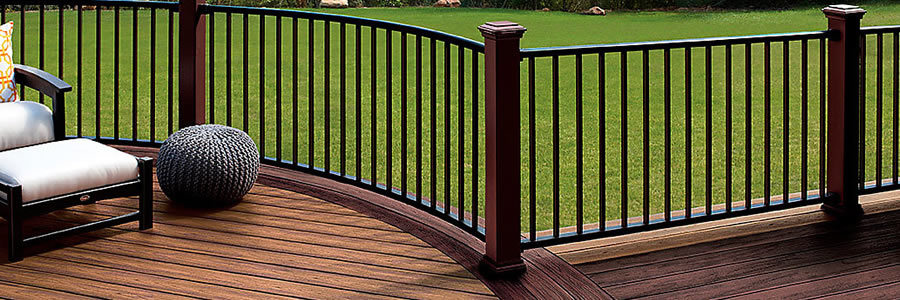
Cable can preserve a view, but it is not simply a low-cost substitute for balusters. Posts, end assemblies and framing must resist cable tension, and long runs require careful layout. Marine-grade hardware, stainless posts and complex stairs can move the project toward the upper end. Read the Cable Deck Railing Cost Guide.
Glass railing
Glass provides the clearest wind and view screen but has the highest material and handling costs. Panel thickness, edge treatment, mounting hardware, engineering, crane or lift access and cleaning expectations all matter.
Project Totals by Railing Length
Measure only the perimeter that actually needs railing, subtracting open stair entrances but including stair rails separately. The following totals illustrate how system choice changes the budget; gates, demolition and repairs are not included.
| Railing length | Common wood, vinyl or basic composite | Premium metal, cable or glass |
|---|---|---|
| 30 linear feet | $600–$3,000 | $3,000–$18,000+ |
| 50 linear feet | $1,000–$5,000 | $5,000–$30,000+ |
| 80 linear feet | $1,600–$8,000 | $8,000–$48,000+ |
| 100 linear feet | $2,000–$10,000 | $10,000–$60,000+ |
These intentionally broad ranges demonstrate why proposals must name the exact product and components. “Install 50 feet of railing” is not enough information to compare two bids.
Guard vs. Handrail: They Are Not the Same
| Component | Main purpose | Where it is commonly used |
|---|---|---|
| Guard | Helps prevent a person from falling from an elevated walking surface | Open deck edges, landings and stair sides where required |
| Handrail | Provides a continuous, graspable surface for support | Along qualifying stair flights and ramps |
| Infill | Closes the area between posts and rails | Balusters, cable, mesh or glass within a guard assembly |
A stair-side assembly can perform both guard and handrail functions, but only when its height, strength, openings, continuity and graspability satisfy the locally adopted requirements. A wide decorative cap is not automatically a code-compliant graspable handrail.
What Changes the Installed Price?
- Material and collection: premium finishes, heavier profiles and hidden hardware cost more.
- Post layout: every corner, termination and stair transition adds components and labor.
- Mounting condition: surface-mounted, fascia-mounted and embedded posts require different structure and waterproofing details.
- Stairs: angled cuts, transitions and continuous handrails are more labor-intensive than level panels.
- Infill: standard pickets usually cost less than cable, glass or custom metalwork.
- Curves and custom fabrication: field measurements, templates and shop work can raise cost sharply.
- Existing structure: replacement work may reveal inadequate rim boards, blocking, decay or corrosion.
- Access and height: elevated work, scaffolding and restricted material handling increase labor.
- Permits and engineering: locally required drawings, inspections or engineering are separate budget items.
Choosing a Railing System
Start with the view, maintenance expectations and architectural style—but screen every option through code compliance and structural compatibility. Ask to see a complete installed sample, not just a short rail section. Post size and spacing influence the appearance as much as the infill.

- For a traditional wood deck: wood rails or composite sleeves with metal balusters can feel visually integrated.
- For a modern deck: dark aluminum, cable or glass reduces visual weight.
- For low maintenance: factory-finished aluminum, vinyl and composite avoid routine staining, though all systems still need cleaning and connection inspections.
- For coastal exposure: verify fastener grade, coating and manufacturer approval for the exact environment.
- For privacy: a code-approved screen or partial solid panel may be more appropriate than standard open infill.
Code-Planning Checkpoints
Building-code requirements vary by jurisdiction and by the code edition and amendments it has adopted. The International Residential Code commonly uses the deck’s height above grade to determine when a guard is required and includes rules for guard height, opening limitations, stair handrails, loads and connections. Treat common online dimensions as planning prompts—not permission to build.
Before ordering a system, confirm with the local building department:
- Whether a guard is required at each deck and landing edge.
- Required guard and handrail heights.
- Maximum permitted openings in level and stair guards.
- Handrail graspability, continuity, extensions and return details.
- Post, blocking and connection requirements.
- Special rules for pools, multifamily property or commercial occupancy.
- Permit, plan and inspection requirements.
Use a complete tested railing system and follow its current installation instructions. Mixing unapproved posts, brackets, rails and infill can invalidate engineering assumptions and warranties.
Replacement Railing vs. New Construction
A replacement quote should include removal and disposal, temporary fall protection, inspection of the deck edge and repair allowances. New posts often need blocking or reinforced framing that cannot be confirmed until the old assembly is removed.
Do not assume an existing deck can accept heavier glass panels or high cable loads. Have the frame and connections evaluated before product ordering. If decking must be lifted to add blocking, coordinating railing with a future resurfacing project may reduce duplicated labor.
DIY vs. Professional Installation
Pre-engineered picket panels can be approachable for an experienced DIYer working on a sound, simple deck. Accurate post placement, structural fastening and stair geometry remain critical. Cable tensioning, glass handling, custom metalwork and uncertain framing are better suited to qualified installers.
A professional proposal should identify the manufacturer, collection, post spacing, mounting method and structural reinforcement—not merely the visible rail color.
Deck Railing Quote Checklist
- Exact railing manufacturer, collection, material, color and infill.
- Total level and stair lengths, post count and gate locations.
- Post-mount method and required structural blocking.
- Demolition, disposal and repair allowance.
- Permit, drawings, engineering and inspection responsibility.
- Complete handrail and stair-transition details.
- Product and workmanship warranties.
- Schedule, payment milestones and change-order terms.
Deck Railing Cost FAQs
How much does 50 feet of deck railing cost?
Fifty feet of common wood, vinyl or basic composite railing may cost about $1,000 to $5,000 installed. Premium metal, cable or glass can range from roughly $5,000 to $30,000 or more. Stairs, gates, demolition and framing repairs can add to those totals.
Which railing material is most affordable?
Site-built pressure-treated wood typically has the lowest initial cost. Vinyl and entry-level composite can reduce finishing needs at a somewhat higher purchase price. Compare maintenance, expected service life and repairability as well as the initial bid.
Does cable railing cost more than aluminum pickets?
Often, yes. Cable needs tension hardware and a post-and-frame system designed for its loads. A simple aluminum-picket kit is usually less expensive than stainless cable with premium posts, especially on stairs.
Can I install new railing on an old deck?
Possibly, but the deck-edge framing and post connections must be sound and compatible with the new system. Surface appearance alone cannot confirm that. Include an inspection and repair allowance in replacement quotes.
Sources and Cost Methodology
Deck Cost Guide synthesized these national planning ranges from current installed-cost reporting, existing specialist railing guides and the component differences among materials. The figures are editorial estimates rather than a manufacturer’s price list. Local labor, engineering, permit requirements and product availability can produce materially different bids.
- HomeGuide: Deck or porch railing cost — current national installed-cost ranges by material.
- International Code Council digital codes — reference library for model codes; confirm the locally adopted edition and amendments with your authority having jurisdiction.
Last substantively reviewed: September 2026. Verify local code and the current manufacturer instructions for the selected railing system.